
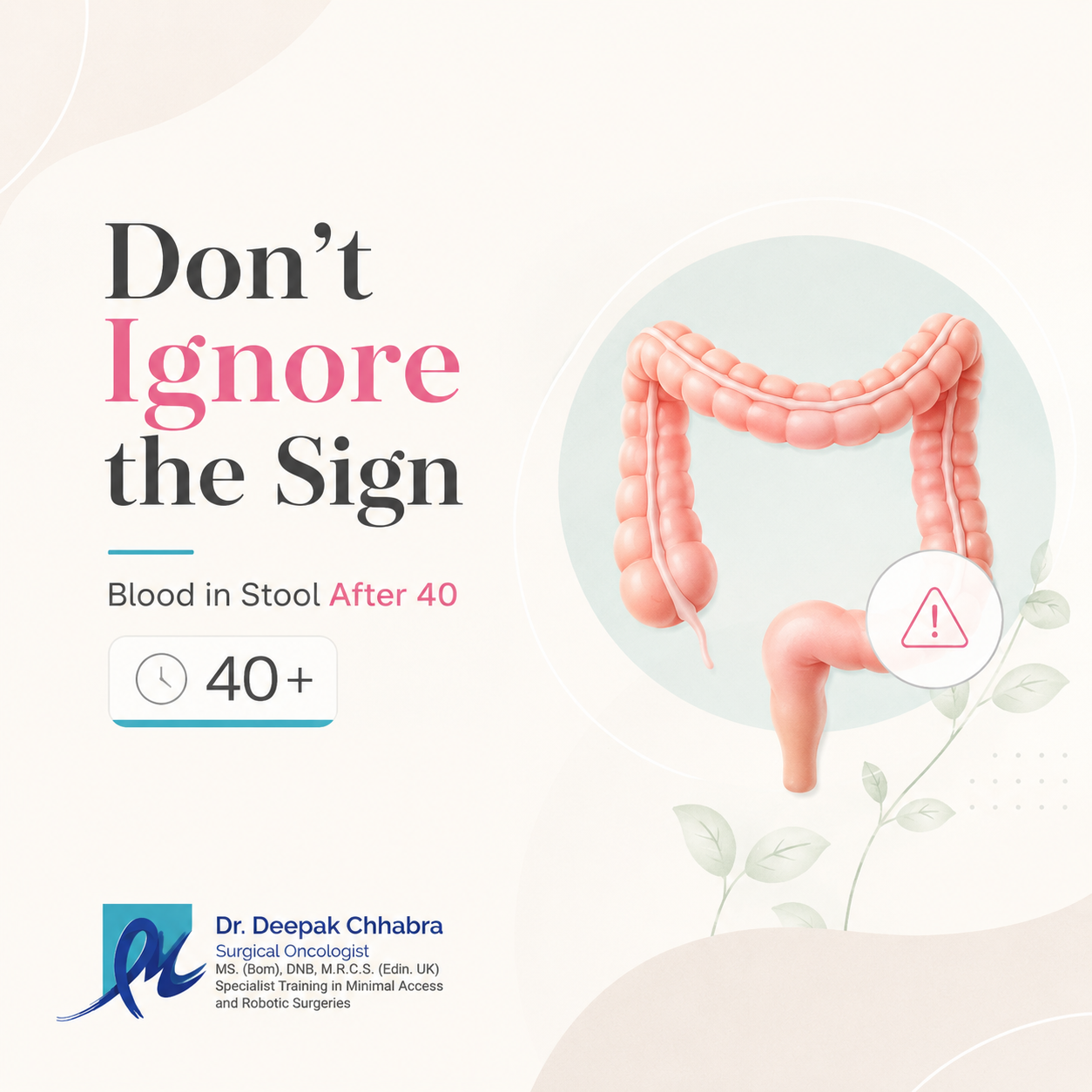
Blood in stool can make anyone anxious. For many people, the first thought is piles. Sometimes that is true. Piles, fissures, constipation, infection, or inflammation can all cause bleeding.
But after 40, repeated bleeding should not be ignored or treated casually at home.
If blood keeps appearing in stool, comes back after piles treatment, appears mixed with stool, or is linked with bowel habit changes, weight loss, weakness, anemia, abdominal pain, or black stools, it is time to get the cause checked properly.
At Mumbai Cancer, we often meet patients who delayed evaluation because they assumed bleeding was “just piles.” Patients trying to understand bleeding, colonoscopy, warning signs, and surgical planning can read more about colon cancer evaluation after persistent bowel symptoms before discussing the next step with their treating team.
Author Information:
Prepared for Mumbai Cancer’s patient education section with a focus on blood in stool after 40, colon cancer warning signs, colonoscopy guidance, and surgical oncology decision-making. Dr. Deepak Chhabra is referenced for his role in gastrointestinal surgical oncology.
Blood in stool is often caused by non-cancer conditions, but after 40, persistent or repeated bleeding needs medical evaluation. The goal is not to assume cancer. The goal is to stop guessing and find the real cause.
You should get checked sooner if bleeding is associated with:
One bleeding episode after hard stool may have a simple explanation. A pattern is different. Repeated bleeding deserves proper review.
Piles are common. Fissures are common too. Many adults see bright red blood after constipation or straining.
That is why the assumption feels logical.
The problem starts when a person keeps using creams, stool softeners, home remedies, or pharmacy medicines without confirming the diagnosis. The bleeding may settle for a few days and then return. Over time, the patient gets used to the symptom instead of asking why it keeps happening.
The American Cancer Society explains that blood in stool can have many causes, and most are not cancer, but blood in stool can also be linked with colorectal cancer.
This is the balance patients need to understand clearly. Blood in stool does not automatically mean colon cancer. But repeated bleeding after 40 should not be dismissed without examination.
Some people notice fresh red blood on toilet paper. Some see drops in the toilet bowl. Some notice blood coating the stool. Others may not see red blood at all but may pass dark or black stools.
The pattern matters.
Bright red blood after hard stool may happen with piles or fissures. Bleeding with pain while passing stool may also point toward a local anal cause. But blood mixed with stool, black stools, repeated bleeding, mucus with blood, unexplained anaemia, weight loss, or altered bowel habits need more careful evaluation.
The safest approach is simple: if the bleeding looks unusual, keeps returning, or comes with other symptoms, do not keep guessing.
A colonoscopy allows the doctor to see the inside of the colon and rectum using a flexible camera. It can help identify piles, polyps, inflammation, ulcers, tumours, bleeding points, or other abnormal areas.
The National Cancer Institute explains that colonoscopy is used to look inside the rectum and colon for polyps, abnormal areas, or cancer.
Patients often feel nervous when colonoscopy is advised. That is understandable. But when bleeding is repeated or unexplained, colonoscopy can give clarity that medicines cannot.
It can also help detect polyps. Some polyps are harmless, but some can become cancerous over time. Finding and removing certain polyps early may reduce future risk.
A stool test may be useful in some situations, but visible bleeding or repeated bowel symptoms often need direct evaluation. The treating doctor should decide the right test sequence.
A person should not wait too long if blood in stool appears with other warning signs.
More concerning patterns include bleeding with unexplained weight loss, persistent abdominal pain, new constipation or diarrhoea, narrowing of stool, low haemoglobin, repeated tiredness, vomiting, appetite loss, or a family history of colorectal cancer.
Some patients continue daily work and assume that nothing serious can be happening because there is no severe pain. That is not always safe.
Colon cancer may not cause severe pain in the beginning. In some patients, bleeding, anaemia, weakness, or bowel habit changes are the first clues.
Timely evaluation helps doctors separate minor causes from conditions that need urgent attention.
The first consultation usually starts with the symptom history.
The doctor may ask when the bleeding started, how often it happens, whether the blood is fresh or dark, whether it is mixed with stool, whether stool is hard or loose, whether passing stool is painful, and whether bowel habits have changed.
They may also ask about weight loss, appetite, weakness, family history, previous piles treatment, medicines, blood thinners, and earlier colonoscopy reports.
Depending on the findings, tests may include blood work, stool tests, colonoscopy, biopsy if an abnormal area is found, and imaging if cancer is suspected or confirmed.
The purpose is not only to stop the bleeding. The purpose is to identify why it is happening.
Most people with blood in stool do not have cancer. But if a tumour is found, the next step should be structured.
Doctors usually confirm the diagnosis with biopsy, then assess the stage with scans and other tests. Treatment planning depends on tumour location, stage, lymph node involvement, spread pattern, patient fitness, and whether the cancer is in the colon or rectum.
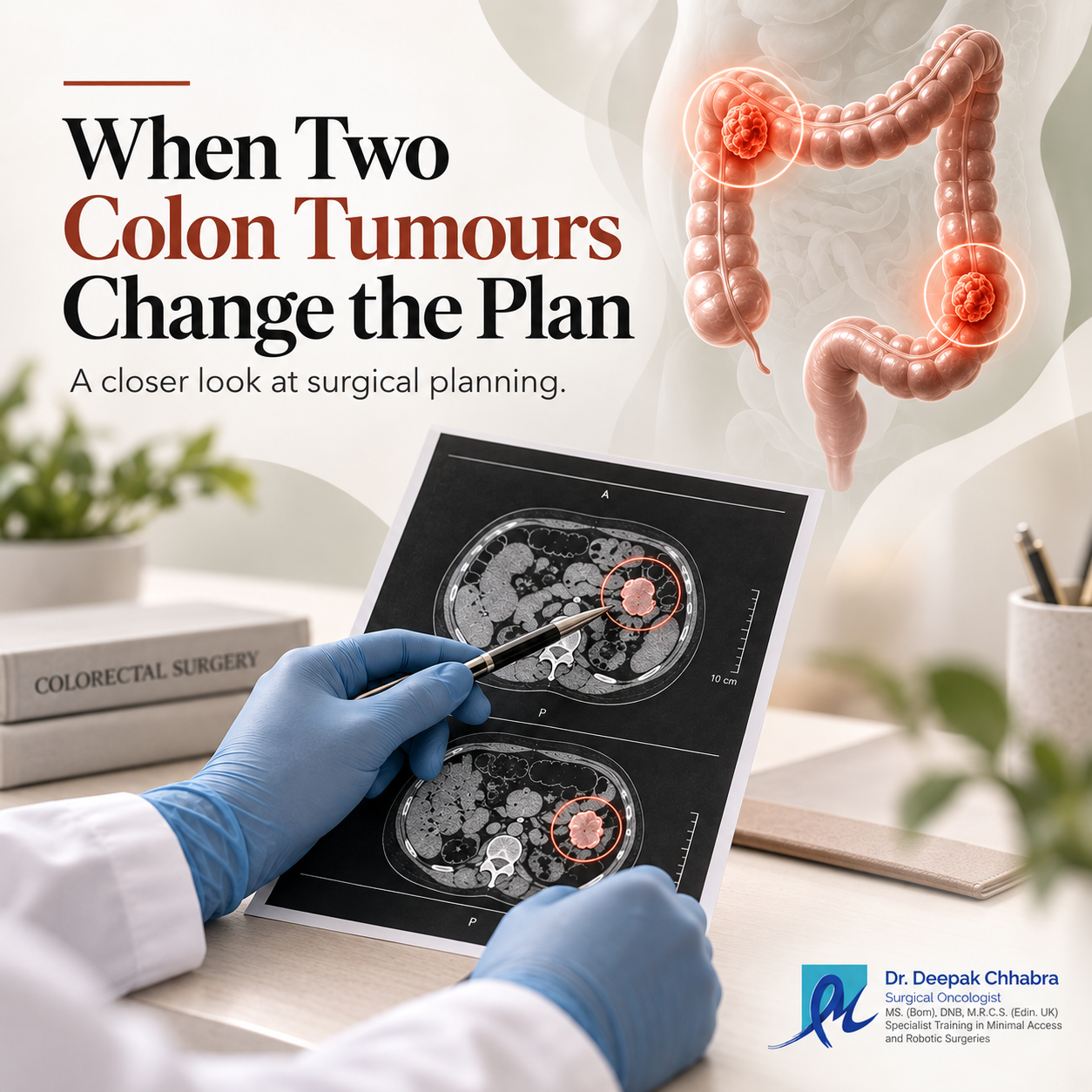
Surgery may be part of treatment when the tumour is suitable for removal. In colon cancer surgery, the cancer-affected part of the colon is usually removed along with nearby lymph nodes. The lymph node report helps doctors understand whether chemotherapy should be discussed after surgery.
Patients comparing options for colorectal cancer treatment in Mumbai should first confirm whether bleeding is from piles, polyps, inflammation, or a tumour before discussing treatment.
A person should consider specialist review when bleeding keeps returning despite piles treatment, when symptoms change, or when the diagnosis is uncertain.
This is especially important after 40.
A colon cancer specialist in Mumbai can review the clinical history, colonoscopy findings, biopsy report, scan images, and general fitness before advising whether the condition is benign, needs surveillance, or requires treatment planning.
Dr. Deepak Chhabra is associated with surgical oncology and gastrointestinal cancer care. His relevance becomes important when bleeding leads to a diagnosis that needs staging, surgery planning, lymph node evaluation, or treatment sequencing.
At Mumbai Cancer, the focus is not to frighten patients with every episode of bleeding. The focus is to help patients avoid delay when a symptom refuses to settle.
A useful consultation becomes easier when the patient carries the right documents.
Bring previous prescriptions, piles treatment details, blood reports, haemoglobin levels, stool test reports, colonoscopy report if done, biopsy report if available, CT scan images if done, and details of medicines such as blood thinners.
A short symptom timeline also helps. Write down when bleeding started, how often it happens, whether it is bright red or dark, whether stool habits changed, and whether there is pain, weight loss, weakness, or appetite loss.
This preparation saves time and helps the doctor decide whether further testing is needed.
Blood in stool after 40 is not always colon cancer. Piles, fissures, constipation, infection, or inflammation can also cause bleeding, but repeated or unexplained bleeding needs proper evaluation. Patients should see a doctor if bleeding continues, returns, or appears with bowel changes, weight loss, weakness, or anaemia.
Piles often cause bright red bleeding, itching, discomfort, or pain during stool, but these symptoms can overlap with other conditions. Blood mixed with stool, black stools, repeated bleeding, unexplained anaemia, weight loss, or altered bowel habits need medical assessment. A doctor may advise examination, stool tests, colonoscopy, or biopsy depending on the findings.
Colonoscopy may be advised when bleeding is persistent, recurrent, unexplained, or associated with warning signs such as bowel habit changes, anaemia, weight loss, or family history. It helps doctors see the colon and rectum directly and identify piles, polyps, inflammation, growths, or bleeding sources. Patients should not delay colonoscopy if their doctor recommends it after reviewing symptoms.
Colon cancer surgery may be needed if testing confirms a tumour that is suitable for surgical removal. The decision depends on tumour location, stage, lymph node involvement, spread pattern, and patient fitness. If cancer is diagnosed, patients should discuss staging, surgery type, lymph node removal, recovery, and whether chemotherapy may be needed.
Blood in stool after 40 should not create panic, but it should create attention.
If bleeding happens once after constipation and settles, the cause may be minor. But if bleeding repeats, mixes with stool, comes with weight loss, weakness, bowel habit changes, abdominal discomfort, or low haemoglobin, the next step should be proper medical evaluation.
Do not keep treating every episode as piles without knowing the cause. Carry your reports, explain the pattern clearly, and get the right test done when advised.
A consultation with Dr. Deepak Chhabra through Mumbai Cancer may help patients and families understand whether bleeding needs colonoscopy, biopsy, staging, or further treatment planning with a colon cancer doctor in Mumbai.
Medical Disclaimer:
This article is for general educational purposes only and should not replace medical advice, diagnosis, or treatment. Blood in stool can occur due to many non-cancer conditions, including piles and fissures, and colon cancer diagnosis depends on medical examination, colonoscopy, biopsy, imaging, and specialist evaluation. Please consult a qualified doctor, gastroenterologist, colorectal surgeon, surgical oncologist, or treating medical team for personalised guidance.
Stay up-to-date with the latest developments in cancer research, treatment, and patient stories through our curated collection of cancer blogs and news articles. From breakthrough discoveries to inspiring survivor journeys.
Discover first hand accounts from patients who have experienced compassionate care and expert treatment at our clinic. Read their reviews to get to know their journey.

5 Out of 5 from 92 Reviews








 VIDEO CONSULTATION
 Phone Calls
 Physical visit