
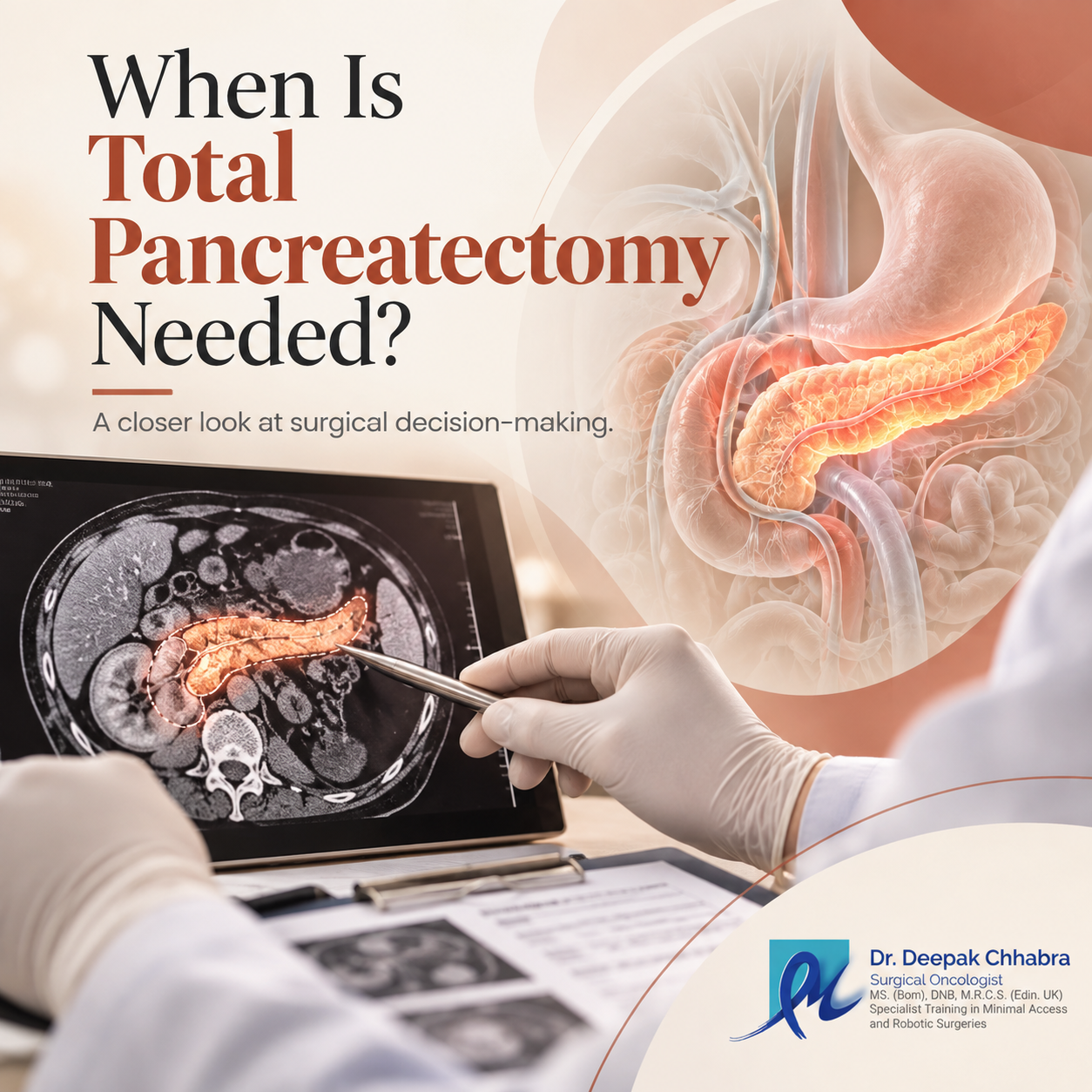
Whipple surgery can sound frightening the first time a family hears it. The word usually comes up when doctors believe a tumour near the head of the pancreas or surrounding area may be removable.
That can bring hope. It can also bring pressure.
For someone meeting a pancreatic cancer doctor in Mumbai, the decision should not be made only from one line in a scan report. The family needs to understand why Whipple surgery is being advised, whether the tumour is truly operable, whether jaundice or nutrition needs correction first, what risks are involved, and what recovery may look like.
Patients trying to understand scans, jaundice, vessel involvement, nutrition, complications, and recovery after pancreatic surgery can read more about planning pancreatic cancer surgery with the right reports before discussing the next step with their treating team.
Whipple surgery is a major operation usually considered for selected tumours in the head of the pancreas, lower bile duct, ampullary region, or nearby area. Before agreeing, patients should understand the stage, blood vessel involvement, jaundice status, nutrition, recovery plan, possible complications, and follow-up treatment pathway.
A clear pre-surgery discussion should explain:
The simple message is this: Whipple surgery should be planned with full clarity, not rushed only because the word “operable” has been mentioned.
Whipple surgery is also called pancreaticoduodenectomy. In simple language, it is an operation where the surgeon removes the head of the pancreas along with nearby organs or structures involved in the cancer operation.
The National Cancer Institute describes the Whipple procedure as surgery that removes the head of the pancreas, gallbladder, part of the stomach, part of the small intestine, and the bile duct.
After removal, the surgeon reconnects the digestive pathway so food, bile, and pancreatic juices can continue moving through the body.
That is why Whipple surgery is not only tumour removal. It is tumour removal, reconstruction, recovery planning, digestion support, and long-term follow-up.
This should be the first discussion.
A tumour may look removable in a written report, but doctors still need to confirm whether it has spread, whether it is close to major blood vessels, and whether the patient is fit enough for major surgery.
A surgeon may review CT scan, MRI, PET-CT in selected cases, biopsy details, blood reports, CA 19-9 levels if done, and previous treatment history. The actual scan images matter because pancreatic surgery decisions often depend on small anatomical details.
A patient should not hear only, “Surgery is possible.” The clearer explanation is: why surgery is possible, what makes it safe enough, and what could make the plan change.
The pancreas sits close to major blood vessels. That is one reason pancreatic surgery needs careful planning.
If the tumour is touching, narrowing, surrounding, or pulling on important vessels, surgery may become more complex. In some cases, chemotherapy may be advised first, followed by repeat scans to reassess whether surgery is safer later.
This is why two patients with pancreatic cancer may receive different advice. One may go directly to surgery. Another may need treatment first because the tumour is too close to important vessels.
Patients comparing opinions from pancreatic cancer surgeons in Mumbai should ask whether the CT or MRI images clearly show operability, vessel involvement, jaundice status, and recovery risk.
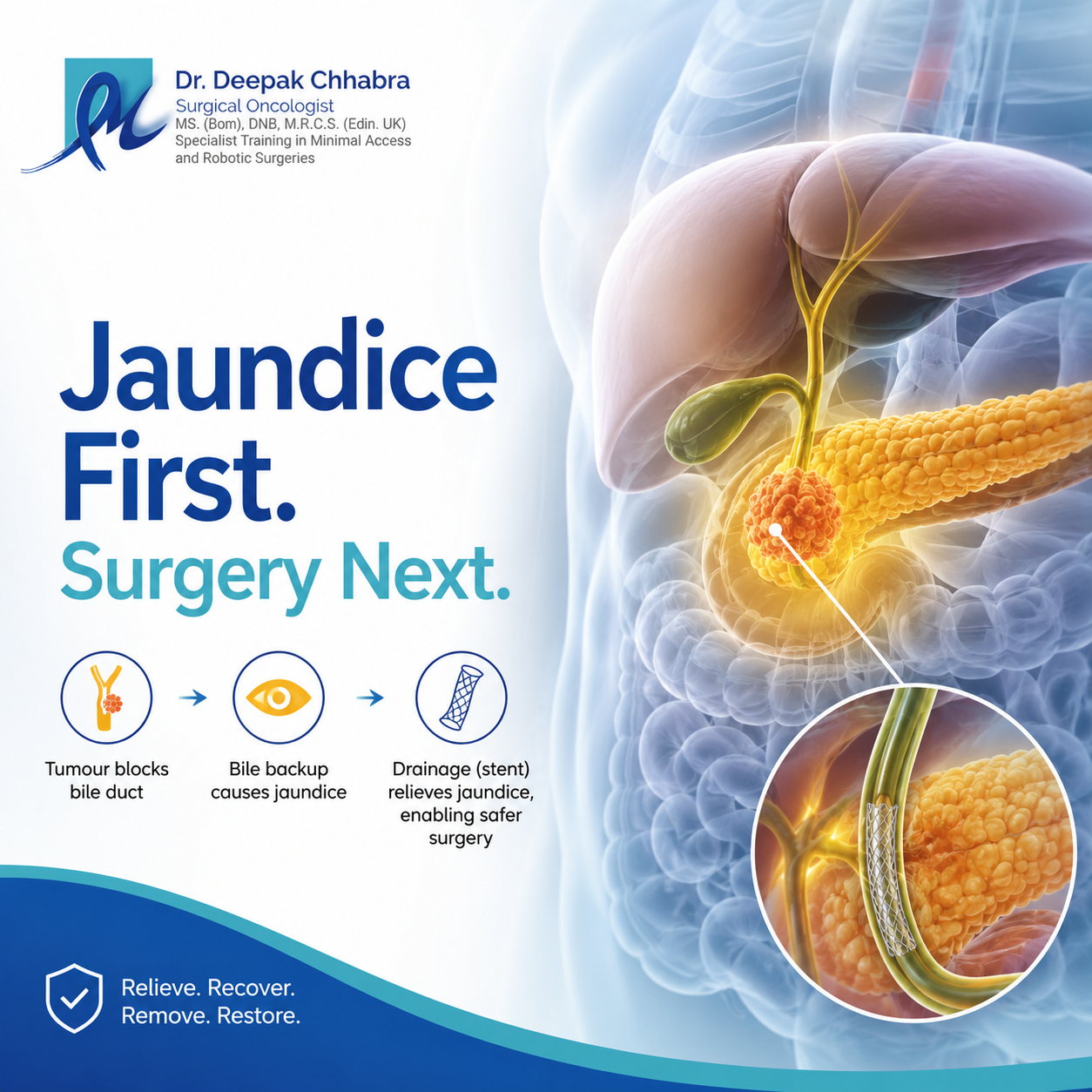
Many tumours near the pancreatic head can block the bile duct and cause jaundice. The patient may notice yellow eyes, dark urine, pale stool, itching, weakness, poor appetite, or weight loss.
High bilirubin can affect surgery preparation, infection risk, nutrition, liver function, and chemotherapy timing. In some patients, doctors may advise bile duct stenting or drainage before major surgery or before chemotherapy.
This does not always mean surgery is being delayed unnecessarily. Sometimes the body needs preparation before a major operation.
The useful question is not only, “Can surgery be done?” A better question is, “Is jaundice making surgery or chemotherapy riskier right now?”
Whipple surgery tests the whole body.
Doctors need to assess heart health, lung fitness, kidney function, diabetes control, nutrition, infection risk, blood counts, and general strength. A patient who has lost significant weight, has uncontrolled sugar, or is severely weak may need preparation before surgery.
Nutrition deserves serious attention. Recovery after Whipple surgery needs healing power. Some patients may need protein correction, diet support, diabetes review, pancreatic enzyme advice, or treatment for jaundice before surgery.
A pancreatic cancer specialist in Mumbai should review not only the tumour but also the patient’s ability to recover after the operation. Surgery planning is not just reading a scan; it is judging whether the patient can safely go through the full journey.
Every major operation has risks. Whipple surgery has specific risks that should be discussed before consent.
Possible complications may include infection, bleeding, delayed stomach emptying, leakage from surgical joins, pancreatic fistula, nutritional difficulty, diabetes-related issues, weakness, and delayed recovery. Cancer Research UK explains that pancreatic cancer surgery is major surgery and discusses possible problems after surgery, including infections, blood clots, delayed gastric emptying, and leakage.
This discussion is not meant to scare the family. It is meant to prepare them.
When families know what doctors are monitoring after surgery, the recovery period feels less confusing. Fever, vomiting, worsening abdominal pain, wound problems, inability to eat, sudden weakness, or unusual drainage should not be ignored after discharge.
Recovery is not complete when the patient leaves the hospital.
In the hospital, the team monitors pain, fluids, drains, diet tolerance, blood sugar, fever, bowel movement, wound healing, infection, and leakage risk. Some patients may spend time in ICU or high-dependency care after surgery.
At home, recovery is gradual. Appetite may be low. Food portions may be smaller. Weight may fluctuate. Bowel habits may change. Fatigue can last for weeks. Some patients may need pancreatic enzymes, diabetes monitoring, nutrition support, wound care, and repeated follow-up visits.
A good recovery plan should explain when walking can start, how food will progress, which symptoms need urgent attention, when stitches or drains are reviewed, and when the final pathology report will be discussed.
The final pathology report often decides the next part of treatment.
It tells the team the tumour type, size, margins, lymph node status, response to any treatment given before surgery, and whether high-risk features are present. Based on this report, doctors may discuss chemotherapy after surgery.
Some patients think surgery is the full treatment. Sometimes surgery is the main step, but pancreatic cancer care often needs follow-up treatment depending on the final report and recovery.
For patients considering pancreatic cancer treatment in Mumbai, the plan should not stop at the surgery date. It should include pathology review, chemotherapy timing if advised, nutrition support, diabetes care, and surveillance.
A useful Whipple consultation needs complete records.
Patients should carry recent CT or MRI images, PET-CT if done, endoscopy or EUS reports if done, biopsy report, CA 19-9 report if available, liver function tests, bilirubin levels, diabetes records, current medicines, previous discharge summaries, and details of weight loss or jaundice.
If stenting or bile duct drainage was done, those records should also be carried.
A photo of one report is usually not enough. Pancreatic surgery decisions often depend on the actual scan images, blood values, treatment history, and the patient’s present strength.
Dr. Deepak Chhabra is associated with surgical oncology and hepatopancreatobiliary cancer care. His relevance becomes important when pancreatic surgery planning depends on tumour stage, vessel involvement, jaundice, nutrition, complication risk, reconstruction, and recovery expectations.
The discussion should not be limited to whether Whipple surgery can be done. The more useful conversation is whether it should be done now, whether preparation is needed first, and what the patient should expect after surgery.
For families, this kind of clarity can reduce fear and help them take a more informed next step.
Whipple surgery can be safely performed in selected patients when the tumour is operable and the patient is fit for major surgery. The risk depends on tumour stage, vessel involvement, jaundice, nutrition, diabetes control, age, and overall medical condition. Patients should discuss personal risk, hospital recovery plan, and possible complications with the surgical team before deciding.
A patient may be suitable for Whipple surgery when the tumour is located in the pancreatic head or nearby region, has not spread widely, and can be removed safely. Suitability also depends on blood vessel involvement, bilirubin levels, nutrition, heart and lung fitness, and scan findings. A specialist review of CT or MRI images and blood reports is needed before confirming the plan.
Recovery after Whipple surgery is gradual and can take several weeks to months. Hospital stay, diet tolerance, fatigue, wound healing, diabetes control, enzyme support, and complications can change the recovery timeline. Patients should ask when they can eat normally, walk independently, resume routine activities, and start further treatment if needed.
Jaundice can delay Whipple surgery when bilirubin is very high, infection is suspected, or bile duct drainage is needed before major treatment. Doctors may advise stenting, drainage, antibiotics, or liver function improvement before surgery depending on the case. Patients should ask whether jaundice needs correction first or whether surgery can proceed safely.
Whipple surgery is a major decision. Patients should not feel rushed into it without understanding the reason, risk, preparation, and recovery plan.
Before deciding, the family should know whether the tumour is operable, whether vessels are involved, whether jaundice needs treatment, whether nutrition is adequate, what complications may occur, and what follow-up may be needed after the final pathology report.
A consultation with Dr. Deepak Chhabra, he may help patients and families understand whether Whipple surgery is the right next step and what should be clarified before treatment begins with a pancreatic cancer doctor in Mumbai.
Medical Disclaimer:
This article is for general educational purposes only and should not replace medical advice, diagnosis, or treatment. Whipple surgery and pancreatic cancer treatment decisions depend on tumour location, stage, vessel involvement, jaundice, bilirubin levels, biopsy findings, scan reports, nutrition, diabetes, age, fitness, and multidisciplinary medical evaluation. Please consult a qualified surgical oncologist, pancreatic surgeon, medical oncologist, or treating cancer team for personalised guidance.

Stay up-to-date with the latest developments in cancer research, treatment, and patient stories through our curated collection of cancer blogs and news articles. From breakthrough discoveries to inspiring survivor journeys.
Discover first hand accounts from patients who have experienced compassionate care and expert treatment at our clinic. Read their reviews to get to know their journey.

5 Out of 5 from 92 Reviews







 VIDEO CONSULTATION
 Phone Calls
 Physical visit