
A person can look reasonably well, have a body weight that does not immediately worry anyone, and still have lost a meaningful amount of muscle before a major pancreatic operation.
Families often notice the change before they know what to call it. Someone who used to walk comfortably begins taking breaks. Stairs become tiring. Meals get smaller. Getting out of a chair takes more effort than it did a few months earlier.
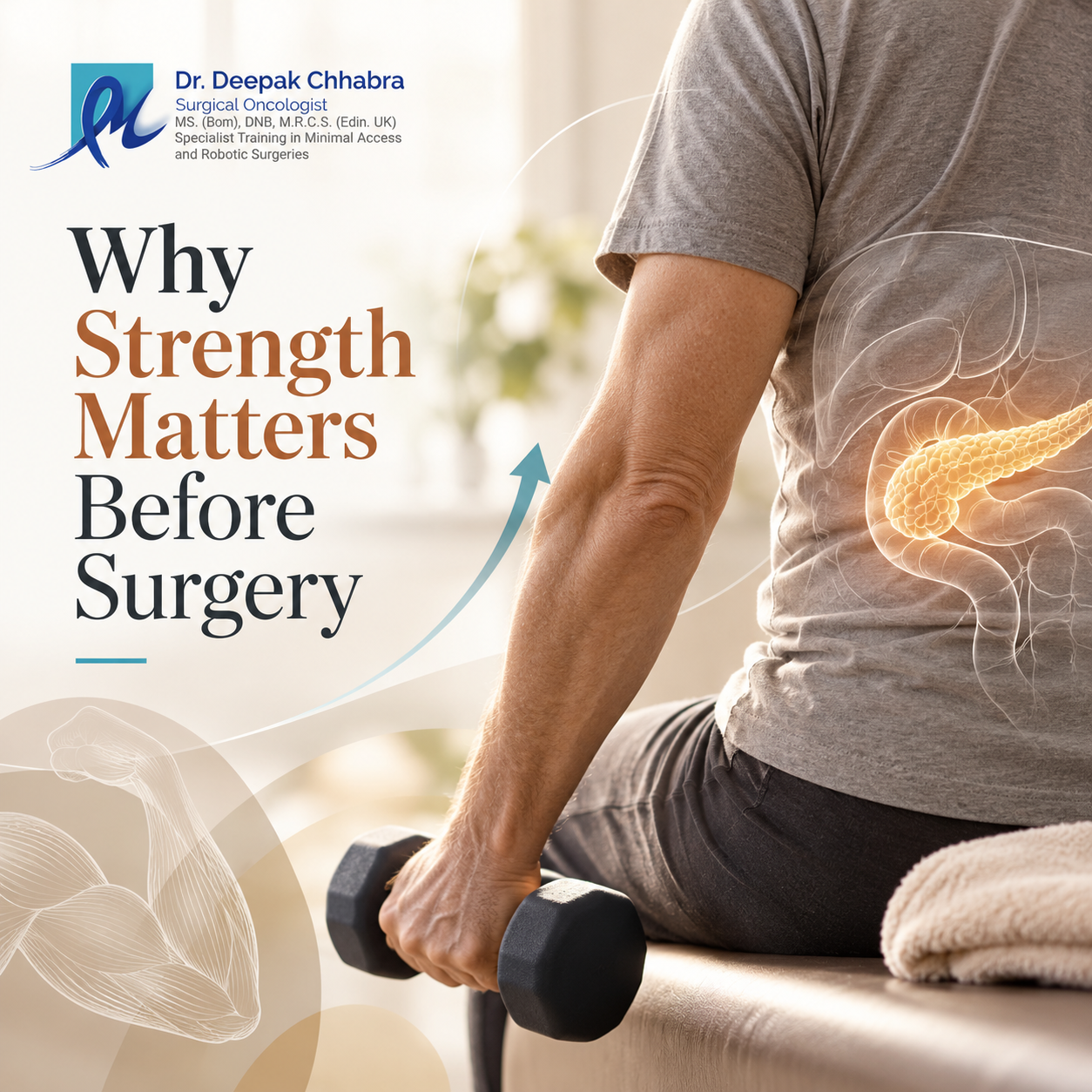
Muscle loss before pancreatic cancer surgery deserves attention because a weighing scale cannot show how much physical reserve a person has for an operation and the recovery that follows.
For patients exploring pancreatic cancer treatment in Mumbai, this is one reason surgical assessment goes beyond scans and tumour stage. Dr. Deepak Chhabra’s overview of pancreatic cancer surgical planning explains how surgery fits into the wider treatment pathway.
Muscle loss and reduced physical reserve can make recovery from pancreatic surgery more demanding. They do not automatically make someone unsuitable for an operation, and they cannot predict exactly how an individual patient will recover.
What they can do is give the surgical team more information.
A patient who has lost a significant amount of weight, strength and independence over a short period may need a different level of nutritional and peri-operative support from someone whose weight and daily activity have remained stable.
That difference is easy to miss if the assessment stops at age, BMI or the number on the scale.
Two words tend to appear often in discussions about major surgery: sarcopenia and frailty.
They are related, but they describe different things.
Sarcopenia refers to loss of skeletal muscle accompanied by reduced muscle strength or physical performance. Frailty is broader. It describes a state in which the body has less reserve available to cope with stress.
Major surgery is one of those stresses.
Age can contribute to frailty, but age does not define it. A person in their seventies may remain active, independent and physically robust. Someone much younger may have become noticeably weaker after months of poor intake, weight loss and inactivity during cancer treatment.
That is why “too old” and “too weak” are poor substitutes for a proper assessment.
The useful question is how much reserve the individual patient has now.
Imagine two patients who both weigh 65 kilograms on the morning of their clinic appointment.
For one, that has been their usual weight for years. They are still walking every day and managing normal activities without difficulty.
The other weighed 75 kilograms three months ago, has lost interest in food and now struggles to climb a flight of stairs.
On paper, the current weight is identical.
Clinically, those two situations are very different.
Muscle can also be lost while body fat remains. A patient may therefore have a normal or even high BMI and still have relatively poor muscle reserve.
This is particularly relevant in pancreatic cancer, where weight loss can develop gradually and may be blamed simply on the diagnosis or on treatment.
The direction of travel matters. So does the speed of change.
Frailty has received increasing attention in pancreatic surgery because it may help identify patients who have less physiological reserve before a demanding operation.
A 2026 systematic review and meta-analysis of 11 studies found that pre-operative frailty was associated with a higher overall risk of complications and higher short-term mortality after pancreatic surgery. Not every outcome showed the same relationship, and the authors highlighted significant variation between studies, so the results should not be treated as a prediction for any one patient.
That distinction matters.
Research can tell us that frailty is relevant at a population level. It cannot tell an individual patient, with certainty, what will happen after surgery.
Frailty assessment therefore works best as one part of the clinical picture, alongside tumour stage, the operation being considered, other medical conditions and the patient’s current level of function.
Poor appetite is only one reason.
Pancreatic cancer can affect eating through pain, nausea, early fullness, fatigue and the general metabolic effects of cancer. Treatment may add another layer, particularly when appetite or activity falls.
There is also a digestive issue that is specific to pancreatic disease.
The pancreas produces enzymes that help break down food. If too little of those enzymes reaches the intestine, food may not be digested and absorbed efficiently.
A patient can be eating and still struggle to maintain weight.
Persistent oily or greasy stools, bloating, diarrhoea and unexplained weight loss may point towards pancreatic enzyme insufficiency. The National Cancer Institute notes that pancreatic cancer and its treatment can interfere with digestion, and that pancreatic enzyme replacement therapy may be used when enzyme production is inadequate.
This is why simply telling someone to “eat more” is often too simplistic.
The first step is understanding why weight and strength are falling.
Loss of physical reserve does not always announce itself dramatically.
Sometimes the clues are ordinary.
A patient who used to walk to the market starts taking a car. Someone who climbed two flights of stairs without thinking now stops halfway. Bathing or dressing takes longer. A chair suddenly feels lower than it used to.
None of those changes proves frailty or sarcopenia.
They are useful because they show how the person’s function has changed in real life.
That information is worth bringing into the consultation. It tells the surgeon something that a CT report cannot.
There is no single test that answers everything.
A pre-operative assessment may include recent weight change, food intake, walking ability and how independently the patient is managing daily activities.
Some centres also use grip-strength measurement, walking speed, chair-rise tests or structured frailty and nutritional tools.
CT scans can provide additional information as well.
Patients with pancreatic cancer already undergo detailed abdominal imaging for staging. Those images can sometimes be used to estimate skeletal muscle quantity without ordering another scan simply for that purpose.
But an imaging measurement should never be allowed to become a stand-alone label.
A scan can estimate muscle.
It cannot tell you whether someone still cooks for themselves, walks every morning or has suddenly stopped managing tasks they handled easily six weeks ago.
Those details matter too.
When low muscle reserve or poor nutrition is identified, the aim is not to send the patient away with an arbitrary target weight and tell them to return once they are “fit.”
That would miss the point.
The more useful approach is to identify problems that can reasonably be addressed within the treatment timeline.
Nutrition may be one of them. If intake has fallen, a dietitian or treating team can work out whether the problem is appetite, meal volume, nausea, digestion or something else.
If pancreatic enzyme insufficiency is suspected, that may need separate assessment and treatment rather than simply adding more food.
Physical activity also needs to be realistic.
Someone who has become noticeably weaker may benefit from supervised strengthening or mobility work. Another patient may already be active enough and simply need encouragement to maintain their current level.
Other issues can also affect reserves. Anaemia, dehydration, poorly controlled blood glucose, infection and other medical conditions may deserve attention before a major operation.
None of these measures can guarantee that surgery will be complication-free.
Their purpose is more practical: find what can be improved and avoid going into a major operation with correctable problems being overlooked.
The word prehabilitation is increasingly heard before complex cancer surgery.
In plain language, it means preparing for an operation rather than waiting until afterwards to begin rehabilitation.
That preparation can include nutrition, appropriate physical activity and management of existing medical problems. Some programmes also address smoking, alcohol use or psychological wellbeing where relevant.
But prehabilitation should not become another hurdle a patient feels they have to “pass.”
Pancreatic cancer has its own treatment timeline.
There may be weeks during staging, systemic treatment or routine pre-operative preparation when nutritional and physical support can happen alongside the cancer plan. In other circumstances, delaying necessary surgery purely to reach a particular strength target may not be appropriate.
The timing has to be individual.
Patients should not postpone an operation on their own because they believe they need to build more muscle first.
Pancreatic surgery is often discussed in terms of resectability: can the tumour be removed?
That is essential, but it is not the only pre-operative question.
The surgeon also needs to know who is going through the operation.
For someone seeing a pancreatic cancer specialist in Mumbai, recent weight loss, strength, activity, digestive symptoms and nutrition can all be relevant alongside the pancreatic-protocol CT and pathology findings.
Patients seeking another opinion from a pancreatic cancer doctor in Mumbai can help by bringing previous weight records if available, a current medication list, pathology reports and the original imaging.
Small details are worth mentioning.
A change in appetite. Oily stools. A new need to rest during normal walking. Trouble getting out of a chair. An increasing reliance on family members for ordinary tasks.
These may sound less important than the scan.
They are not.
The word frailty can be uncomfortable.
Patients sometimes hear it as a judgement: You are weak. You are old. You cannot have surgery.
That is not how the term should be used.
Frailty describes reserve. It helps clinicians recognise that a patient may need closer nutritional attention, additional support around surgery or a more detailed discussion about recovery.
It does not replace cancer staging.
It does not automatically cancel an operation.
And it should never reduce a patient to a score on a form.
The surgical decision still has to bring together the disease, the proposed procedure, other medical problems and the expected benefit for that individual.
Yes. Sarcopenia can occur in people with normal or higher body weight because body fat can hide a reduction in skeletal muscle. Strength, weight history and physical function therefore give more useful information than BMI alone.
No. Frailty provides information about physical reserve and possible surgical risk; it is not an automatic reason to rule out an operation. The decision also depends on cancer stage, resectability, other illnesses and the expected benefit of surgery.
No programme can guarantee that postoperative complications will be prevented. Nutrition and appropriate activity may help address specific deficits and improve preparedness when they are medically suitable. Any plan should fit within the cancer-treatment timeline and be discussed with the treating team.
Explain how much weight has been lost, how quickly it happened and whether appetite, walking ability or normal daily activity has changed. Digestive symptoms such as oily stools, diarrhoea or persistent bloating are also worth mentioning. These details can help the team decide whether nutritional, pancreatic-enzyme or functional assessment needs more attention.
A scan can show the tumour.
It can show its relationship with nearby vessels and help the team judge whether surgery is possible.
What it cannot show is how tired someone feels after walking across the room, whether they have stopped eating a full meal, or how much strength they have lost since treatment began.
That information comes from the patient.
Muscle loss, nutrition and frailty should not be used to frighten someone preparing for pancreatic surgery. They are useful because they make the assessment more complete.
If there are problems that can be improved, they can be addressed.
If reserve is genuinely limited, that knowledge can help the surgical team plan recovery more thoughtfully and have a more realistic discussion with the patient and family.
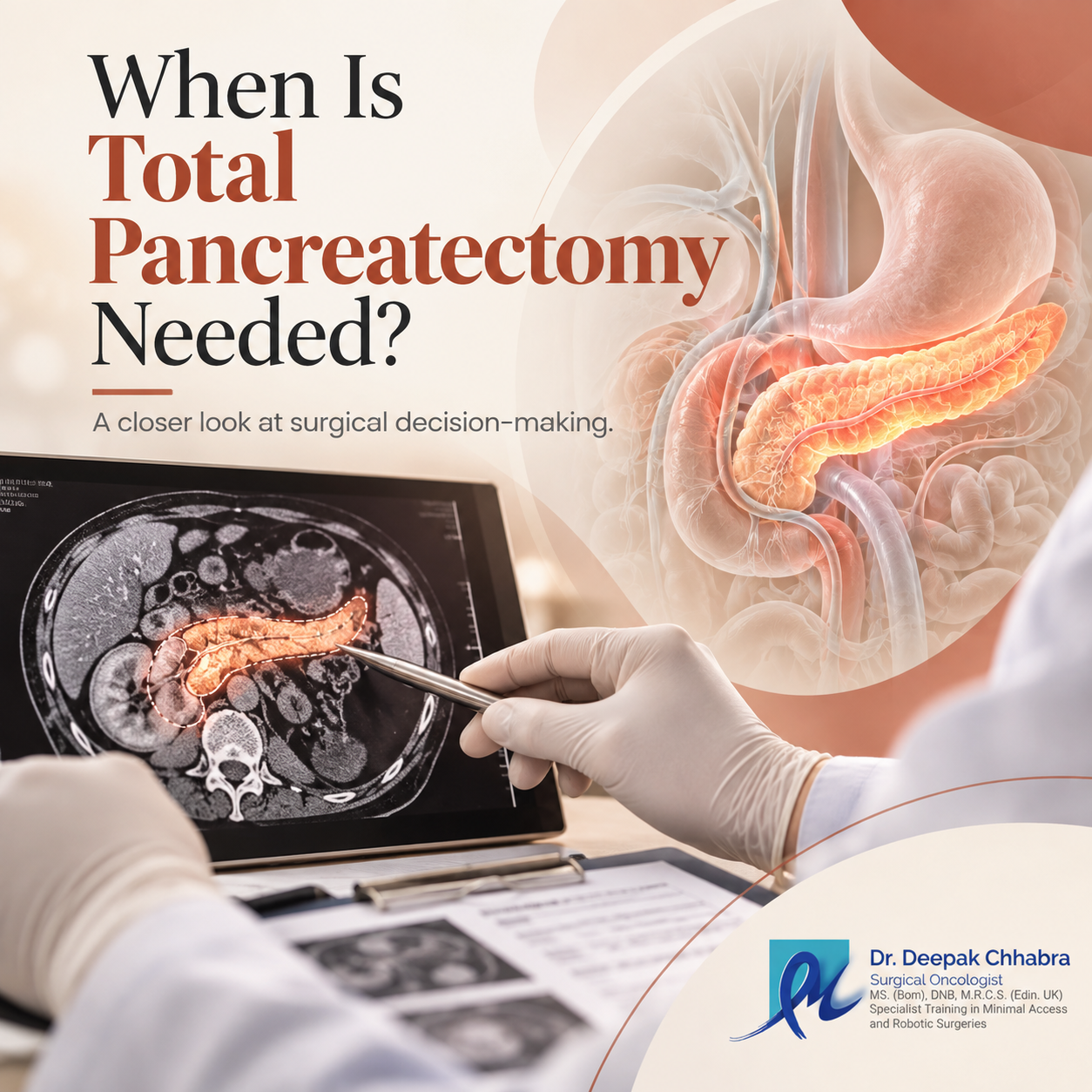
Before a major pancreatic operation, the question is therefore not only whether the tumour can be removed.
It is also whether the patient is being prepared as carefully as possible for what comes next.
Stay up-to-date with the latest developments in cancer research, treatment, and patient stories through our curated collection of cancer blogs and news articles. From breakthrough discoveries to inspiring survivor journeys.
Discover first hand accounts from patients who have experienced compassionate care and expert treatment at our clinic. Read their reviews to get to know their journey.

5 Out of 5 from 92 Reviews






 VIDEO CONSULTATION
 Phone Calls
 Physical visit