
Many patients are told that an ultrasound or CT scan has shown a “liver tumor.” Naturally, the family may immediately think it means cancer. But tumor simply means a lump or growth. A liver tumor can be benign, which means non-cancerous, or malignant, which means cancer. It can start in the liver, or it can be cancer that has spread to the liver from another organ. The treatment depends on knowing exactly which one it is.
This is why liver tumor treatment in Mumbai should begin with careful diagnosis rather than panic. Some benign liver tumors only need observation. Some need surgery because of size, bleeding risk, symptoms, or uncertainty. Cancerous tumors need stage-based treatment. A liver tumor specialist in Mumbai helps sort out these possibilities using history, blood tests, imaging, and sometimes biopsy.
Benign liver tumors include hemangioma, focal nodular hyperplasia, hepatic adenoma, cysts, and other less common lesions. Hemangioma is often found incidentally and may not need treatment unless it is very large or symptomatic. Focal nodular hyperplasia is usually benign and stable. Hepatic adenoma may need closer attention because some adenomas can bleed or rarely turn cancerous, especially when large.
Even benign tumors should be interpreted in context. A person with cirrhosis, hepatitis B, hepatitis C, or previous cancer history needs more careful evaluation than a young healthy patient with a typical hemangioma. Imaging quality also matters. A vague ultrasound report may need a contrast MRI or CT scan for clarity.
A liver tumor may be cancer if imaging shows suspicious enhancement patterns, if AFP is raised, if there is cirrhosis, if the lesion is growing, if there are multiple lesions, or if the patient has symptoms such as weight loss, jaundice, appetite loss, abdominal swelling, or persistent pain. Hepatocellular carcinoma commonly develops in a diseased liver. Cholangiocarcinoma arises from bile duct cells. Metastatic tumors reach the liver from cancers of the colon, pancreas, stomach, breast, lung, and other organs.
Because the liver is a common site for spread, doctors must confirm whether the tumor is primary liver cancer or secondary cancer. This distinction changes treatment. Primary liver cancer may be treated with liver-directed surgery, ablation, embolization, transplant evaluation, targeted therapy, or immunotherapy. Secondary liver tumors often require treatment based on the original cancer type, sometimes combined with liver surgery or ablation in selected cases.
The evaluation begins with a detailed history. The doctor asks about hepatitis, alcohol use, fatty liver disease, diabetes, previous cancers, weight loss, pain, jaundice, fever, medicines, oral contraceptive use in relevant patients, and family history. Blood tests may include liver function, kidney function, complete blood counts, clotting profile, viral markers, AFP, CA 19-9, CEA, and other markers depending on the case.
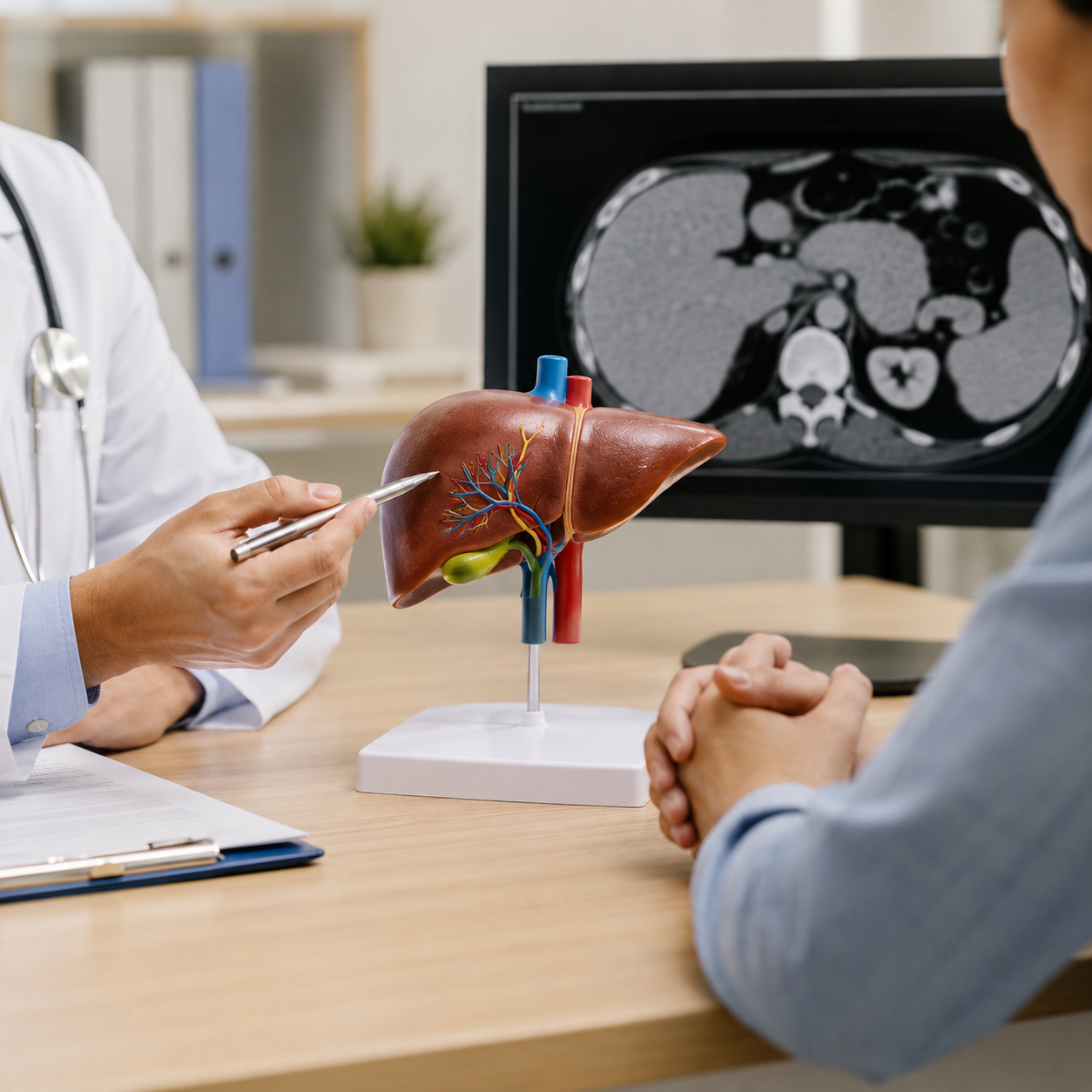
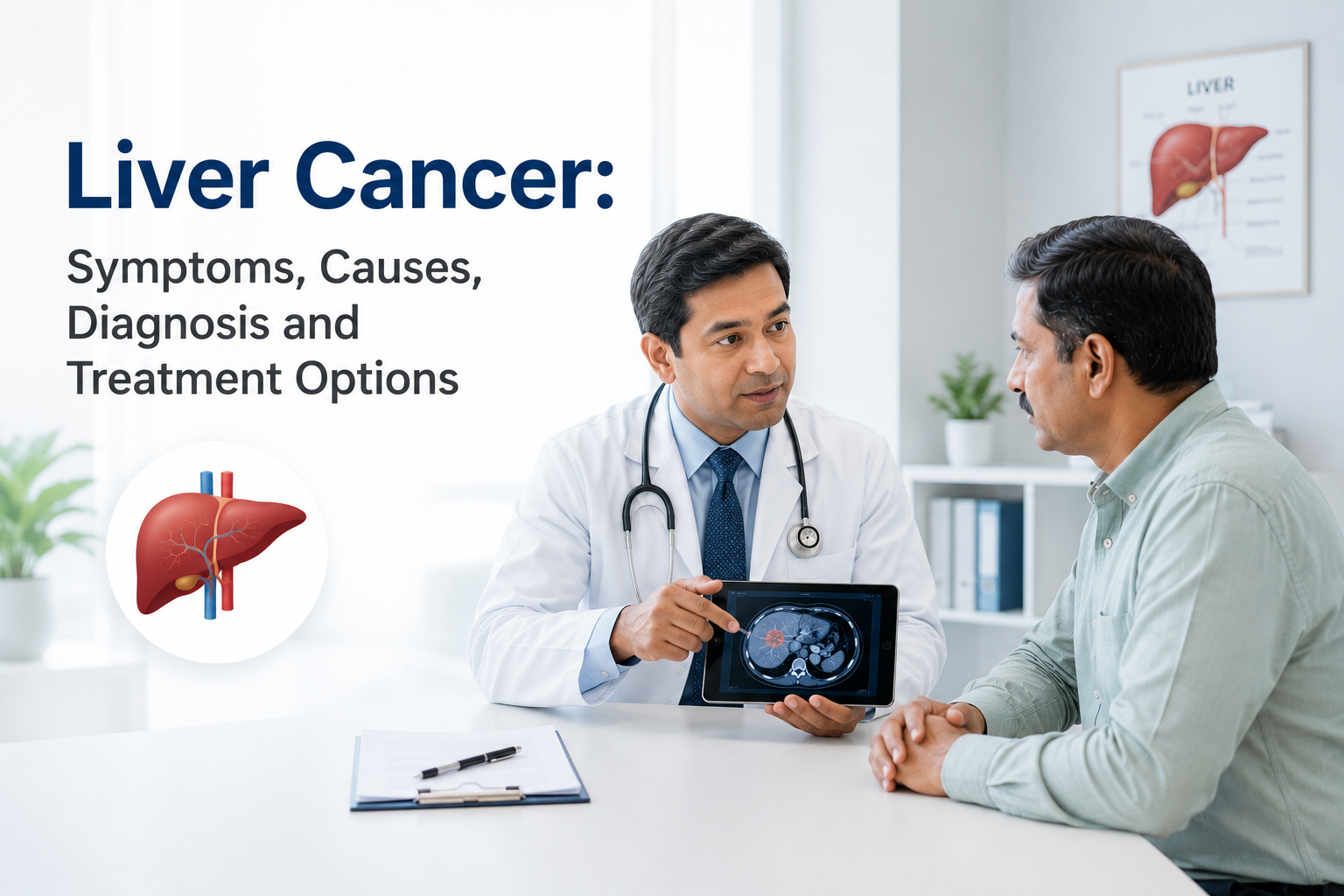
Imaging is central. A multiphasic contrast CT or liver MRI can show how the lesion takes up and releases contrast. This pattern gives important clues. Sometimes PET-CT is useful, especially when metastatic disease is suspected. Biopsy is done when imaging and blood tests do not give a confident answer or when treatment requires tissue confirmation.
If the tumor is benign and stable, follow-up scans may be enough. If it is large, symptomatic, bleeding, or uncertain, surgery may be advised. If it is HCC and suitable for curative treatment, surgery or ablation may be considered. If liver function is poor, transplant evaluation or non-surgical treatment may be more suitable. If disease is advanced, medical oncology treatments can help control it.
For metastatic liver tumors, the team looks at the original cancer, number and location of liver lesions, response to chemotherapy, and whether disease outside the liver is controlled. In selected colorectal liver metastases, surgery can be part of treatment. In other cancers, systemic therapy may be the main approach. The point is simple: the name of the tumor guides the plan.
A liver tumor should not be ignored just because there is no pain. At the same time, it should not be assumed to be cancer before proper evaluation. The safest approach is timely specialist review. Bring scan images, not only the printed report. Many decisions depend on viewing the actual CT or MRI images.
At Mumbai Cancer, Dr. Deepak Chhabra evaluates liver tumors with a practical approach: confirm the diagnosis, assess risk, decide whether surgery is needed, and coordinate oncology care when required. This helps families move from fear to a clear plan.
If you or a family member has a liver mass, abnormal liver scan, raised AFP, cirrhosis with a new lesion, jaundice, unexplained weight loss, or has been advised liver cancer surgery, it is sensible to take an early specialist opinion. At Mumbai Cancer, Dr. Deepak Chhabra and the team guide patients with careful evaluation, surgical oncology expertise, and coordinated care with medical oncology, hepatology, radiology, interventional radiology, anaesthesia, nutrition, and supportive care teams.
Every patient is different. The right plan depends on the type of liver cancer, the size and number of tumors, liver function, overall health, and whether the disease is limited to the liver or has spread. A timely consultation can help the family understand options clearly and avoid delay.
No. Tumor means growth. It may be benign or cancerous, and proper imaging helps identify the type.
No. Some liver cancers can be diagnosed on typical imaging, but biopsy is useful when the diagnosis is uncertain.
Yes, some benign tumors need surgery if large, symptomatic, bleeding, growing, or unclear on imaging.
A liver mass is often first seen on ultrasound. Ultrasound is useful for screening, but it may not be enough to decide treatment. A contrast-enhanced multiphasic CT scan or liver MRI gives more detail about the lesion’s behaviour, blood supply, capsule, washout, surrounding vessels, bile ducts, and other lesions. These details help distinguish benign tumors, HCC, cholangiocarcinoma, and metastasis.
Patients should avoid making major decisions based only on a vague phrase such as “space occupying lesion.” That phrase only means there is a lesion occupying space. It does not tell the family whether the lesion is harmless, suspicious, or cancerous. A liver tumor specialist in Mumbai will usually ask for better imaging if the available scan is incomplete.
Indeterminate means the scan does not clearly prove what the tumor is. This can happen when the lesion is very small, when contrast timing was not ideal, when the liver is cirrhotic, or when the features overlap between different conditions. The next step may be repeat imaging with a better protocol, MRI with liver-specific contrast in selected cases, PET-CT if metastasis is suspected, or biopsy if tissue confirmation is required.
Indeterminate does not mean the doctor is careless. It means the biology and imaging are not giving a simple answer yet. The safest approach is planned evaluation, not guesswork. Follow-up timing should be decided by the specialist because some lesions need urgent clarification while others can be monitored.
Families often search online immediately after reading the scan report. Online reading can be helpful, but it can also create panic because the same words may describe very different conditions. A hemangioma, adenoma, HCC, and metastasis may all appear under broad “liver tumor” searches. Until a specialist reviews the case, avoid assuming the worst.
At the same time, do not postpone evaluation because the patient feels fine. Both over-panic and under-reaction can create problems. Mumbai Cancer helps patients move step by step: identify the tumor type, assess risk, decide whether treatment is needed, and plan follow-up. This measured approach is especially helpful for families who feel overwhelmed by medical language.
Ask whether the tumor appears benign or malignant, whether the scan quality is enough, whether biopsy is needed, whether the liver has cirrhosis, whether tumor markers are required, whether the lesion is growing, and whether surgery is being advised for symptoms, risk, or cancer control. Clear answers help the family understand the reason behind each recommendation.
If a liver tumor is judged benign, the doctor may still advise follow-up depending on the type, size, symptoms, and patient risk factors. Follow-up does not mean the doctor is worried; it means the lesion should be watched responsibly. If a tumor grows, changes appearance, causes pain, or becomes difficult to classify, the plan may change.
For uncertain tumors, families should keep appointments and repeat scans on schedule. Missing follow-up can turn a manageable issue into a late diagnosis. At Mumbai Cancer, follow-up advice is explained in simple terms so patients know whether they need observation, repeat imaging, biopsy, surgery, or oncology treatment.
Medical note: This article is for patient education and should not replace a personal consultation. Treatment decisions for liver cancer should be made after reviewing reports, scans, liver function, and overall health.

Stay up-to-date with the latest developments in cancer research, treatment, and patient stories through our curated collection of cancer blogs and news articles. From breakthrough discoveries to inspiring survivor journeys.
Discover first hand accounts from patients who have experienced compassionate care and expert treatment at our clinic. Read their reviews to get to know their journey.

5 Out of 5 from 92 Reviews





















 VIDEO CONSULTATION
 Phone Calls
 Physical visit