
A patient goes through gallbladder surgery because of stones. The operation is done. The family feels relieved. Everyone thinks the problem is over.
Then the pathology report arrives. It says gallbladder cancer.
This is a difficult moment because the patient did not go into surgery expecting a cancer diagnosis. The gallbladder has already been removed, so the most common question is: “Does this mean the cancer is already treated, or is something more needed?”
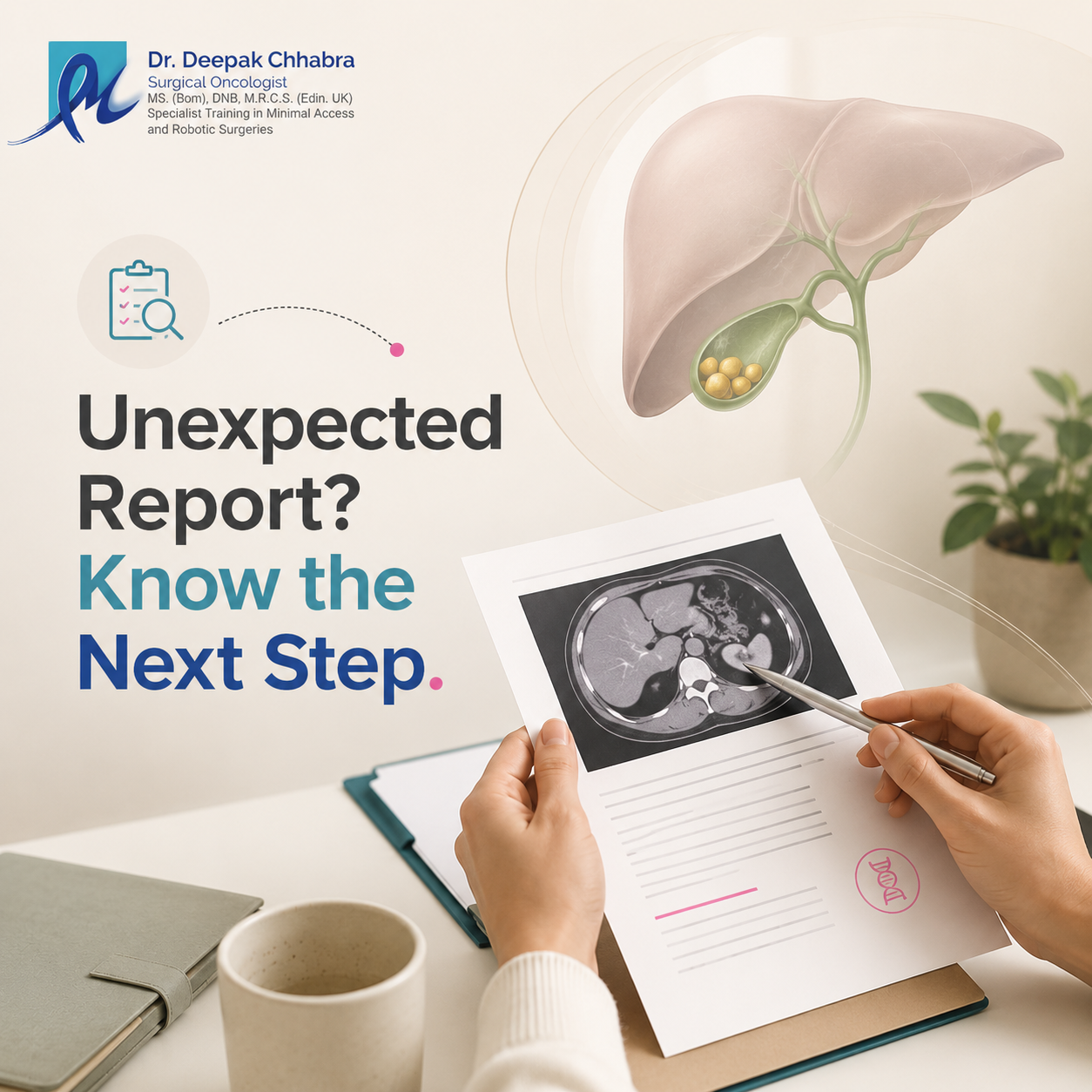
For families looking for gallbladder cancer treatment in Mumbai, the next step should not be panic. It should be a structured review of the pathology report, first surgery details, staging scans, liver bed risk, lymph nodes, and whether another operation may be useful.
At Mumbai Cancer, patients trying to understand pathology findings, staging scans, liver bed evaluation, lymph nodes, and possible re-surgery can read more about specialist planning after gallbladder cancer is found unexpectedly before discussing the next step with their treating team.
Author Information:
Prepared for Mumbai Cancer’s patient education section with a focus on gallbladder cancer surgery planning, incidental cancer after gallstone surgery, pathology review, staging, liver bed evaluation, and patient decision support. Dr. Deepak Chhabra is referenced for his role in surgical oncology and hepatobiliary cancer care.
When gallbladder cancer is found after gallstone surgery, the first step is to review the full pathology report and confirm whether the original gallbladder removal was enough. The next decision depends on tumour depth, margins, liver-side involvement, staging scans, lymph node risk, and the patient’s fitness for further treatment.
A careful reassessment usually checks:
The practical point is simple: a cancer report after gallstone surgery needs specialist review, not guesswork.
Gallbladder cancer can sometimes be found only after the gallbladder has already been removed for gallstones or chronic inflammation. Doctors often call this incidental gallbladder cancer.
This can happen because early gallbladder cancer may not always look different from gallstone disease before surgery. Pain in the upper abdomen, nausea, indigestion, discomfort after meals, or inflammation can all appear like a routine gallbladder problem.
The American Cancer Society explains that some gallbladder cancers are found by accident after gallbladder removal done for another reason, such as gallstones. American Cancer Society
For the patient, this does not always mean the first surgery was wrong. It means the removed gallbladder has now given new information, and the treatment discussion must shift from routine gallstone care to cancer reassessment.
After unexpected gallbladder cancer is found, the pathology report becomes the centre of the next decision.
Families often focus only on the word “cancer.” Doctors need to go deeper than that. They look at the tumour depth, grade, margins, cystic duct margin, liver-side involvement, lymphovascular invasion, and whether the report gives enough detail to guide the next step.
A very early cancer limited to the inner layer of the gallbladder wall may need a different plan from cancer that has grown into deeper layers. Cancer close to the liver bed or margin can raise concern that microscopic disease may remain even though the gallbladder itself has been removed.
If the pathology report is incomplete or unclear, the tissue blocks or slides may need review by an experienced pathology team. This can help avoid both undertreatment and unnecessary treatment.
Some families ask, “Why do we need scans if the gallbladder is already out?”
The answer is that gallbladder removal tells doctors what was found inside the organ. Scans help doctors check whether there is any visible disease left behind or whether cancer has spread to nearby areas.
Depending on the case, doctors may advise CT scan, MRI, MRCP, PET-CT, blood tests, liver function tests, or tumour markers. These tests may help assess the liver bed, bile ducts, lymph nodes, abdomen, and distant spread.
A scan after the pathology report does not mean the first operation failed. It means doctors are now completing cancer staging. That staging helps decide whether re-surgery, chemotherapy, close follow-up, or another plan is safer.
A second operation may be discussed when the pathology report suggests that simple gallbladder removal may not be enough for cancer control.
In selected patients, doctors may consider removing a small part of liver tissue from the area where the gallbladder was attached. They may also remove nearby lymph nodes for assessment. This is because the gallbladder lies directly against the liver, and cancer can sometimes spread toward the liver side or nearby nodes.
Cancer Research UK explains that surgery for gallbladder cancer may involve removing the gallbladder, nearby liver tissue, and nearby lymph nodes depending on the situation. Cancer Research UK
This does not mean every patient needs another operation. The decision depends on tumour depth, margin status, scan findings, time since surgery, overall health, and whether there is any evidence of spread elsewhere.
A second surgery should not be done only because the word cancer appears in the report. It should be considered when the expected benefit is stronger than the risk.
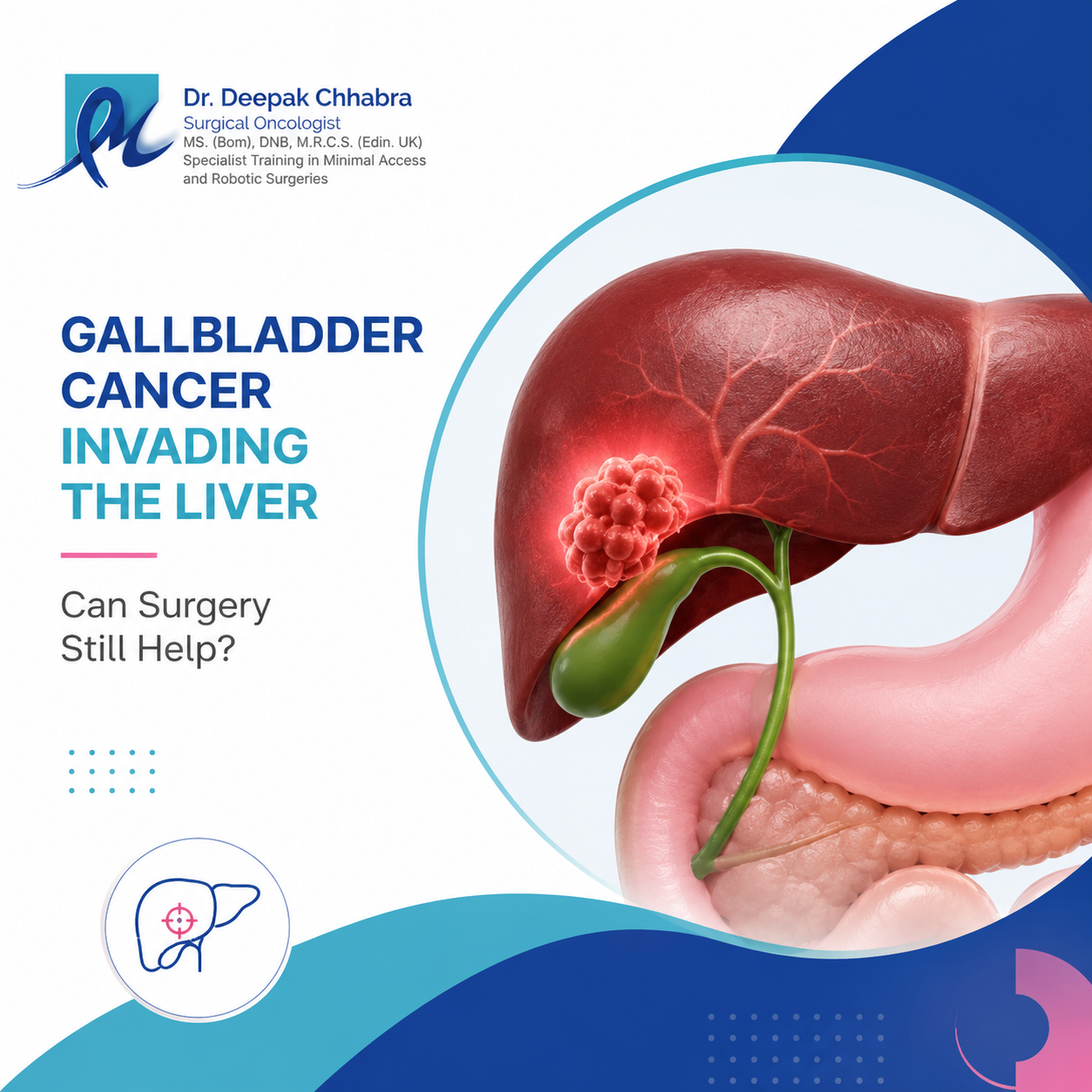
The liver bed is the part of the liver where the gallbladder was attached.
This area matters because gallbladder cancer can grow toward the liver side. Even after gallbladder removal, doctors may need to know whether the area next to the gallbladder is at risk.
Nearby lymph nodes also matter. Gallbladder cancer can spread through lymphatic channels, and sometimes this spread is not clear on the first scan. That is why lymph node evaluation may become part of the treatment discussion.
For a family, this can sound unexpected. They may think, “The gallbladder is gone, so why talk about liver and lymph nodes?” The reason is anatomy. The gallbladder, liver, bile ducts, and nearby nodes are closely connected, and cancer planning must consider that relationship.
Second surgery is not always needed after gallbladder cancer is found.
If the cancer is extremely early, margins are clear, and there are no concerning features, doctors may advise close observation and follow-up in selected cases. If the tumour has grown deeper, margins are close or involved, or the cancer is on the liver side, re-surgery may be discussed.
There are also situations where second surgery may not help. If scans show spread outside the area, if the patient is not fit for another major operation, or if the expected benefit is limited, doctors may discuss chemotherapy, supportive care, or another approach instead.
This is why patients should avoid two assumptions. Do not assume the first surgery has completed all treatment. Do not assume every case needs immediate re-surgery.
The report and scans should guide the decision.
The family should arrange specialist review promptly after receiving the pathology report.
That does not mean rushing into another operation the next day without staging. It means avoiding delay in getting the right review. A gallbladder cancer specialist in Mumbai can review the pathology report, first surgery details, scans, and patient fitness before advising whether re-surgery should be considered.
Delaying for weeks without a plan can create anxiety and may affect decision-making. Rushing without complete information can also be unsafe.
The balanced approach is to collect all reports, arrange staging scans if advised, and meet a specialist who can explain whether the next step is re-surgery, follow-up, chemotherapy, or further testing.
A useful consultation depends on complete documents.
Patients should carry the final histopathology report, discharge summary, operation notes if available, pre-surgery ultrasound report, CT or MRI reports if already done, liver function tests, blood reports, current medicines, and details of diabetes, heart disease, kidney disease, blood thinners, or previous abdominal surgery.
The pathology slides or tissue blocks may also be requested in some cases. This is especially useful when the report does not clearly mention tumour depth, margins, grade, cystic duct margin, liver-side involvement, or lymphovascular invasion.
A photo of one report on a phone is often not enough. Printed documents, digital scan images, and surgery notes can make the specialist consultation much clearer.
Dr. Deepak Chhabra is associated with surgical oncology and hepatobiliary cancer care. His relevance becomes important when gallbladder cancer is found unexpectedly after gallstone surgery and the family needs clarity on pathology staging, liver bed risk, lymph nodes, re-surgery, and treatment sequencing.
At Mumbai Cancer, the aim is not to create fear after a surprising report. The aim is to understand what has already been removed, what risk may remain, and whether another planned step can improve cancer control.
For patients looking for a gallbladder cancer doctor in Mumbai, this type of reassessment can help turn a shocking pathology report into a clearer treatment pathway.
Second surgery is not always needed after gallbladder cancer is found, but it may be advised when the tumour has grown beyond very early layers or when margins, liver bed risk, or lymph node risk are concerning. The decision depends on pathology details, tumour depth, scan findings, and patient fitness. Patients should get the full pathology report reviewed by a specialist before assuming treatment is complete.
A specialist review should be arranged promptly after gallbladder cancer is reported, ideally without waiting for symptoms to appear. The urgency depends on tumour stage, margin status, scan findings, time since surgery, and the patient’s overall health. Patients should carry the pathology report, discharge summary, operation notes, and any scan images for the first consultation.
The final histopathology report of the removed gallbladder is the most important document. Doctors may also need the operation note, discharge summary, pre-surgery ultrasound, CT or MRI scans, liver function tests, and pathology slides or blocks if a second opinion is needed. These records help decide whether staging scans, re-surgery, chemotherapy, or follow-up should be planned.
Liver bed surgery means removing the area of liver tissue next to where the gallbladder was attached. It may be considered when cancer depth, margin status, or liver-side involvement suggests a risk of microscopic disease near that area. Patients should ask whether their pathology report shows features that make liver bed and lymph node evaluation necessary.
Gallbladder cancer found after gallstone surgery can feel like a second diagnosis after the family thought treatment was over.
But this situation needs clarity, not panic.
The safest next step is to collect the pathology report, operation details, discharge summary, blood reports, and scan images, then arrange specialist reassessment. The key discussion should cover tumour depth, margins, staging scans, liver bed risk, lymph nodes, and whether re-surgery should be considered.
A consultation with Dr. Deepak Chhabra through Mumbai Cancer may help patients and families understand the next step in gallbladder cancer treatment in Mumbai with more confidence and less confusion.
Medical Disclaimer:
This article is for general educational purposes only and should not replace medical advice, diagnosis, or treatment. Gallbladder cancer treatment decisions depend on pathology findings, tumour depth, margin status, scan reports, liver bed involvement, lymph node risk, patient fitness, time since surgery, and multidisciplinary medical evaluation. Please consult a qualified surgical oncologist, hepatobiliary surgeon, medical oncologist, or treating cancer team for personalised guidance.
Stay up-to-date with the latest developments in cancer research, treatment, and patient stories through our curated collection of cancer blogs and news articles. From breakthrough discoveries to inspiring survivor journeys.
Discover first hand accounts from patients who have experienced compassionate care and expert treatment at our clinic. Read their reviews to get to know their journey.

5 Out of 5 from 92 Reviews




 VIDEO CONSULTATION
 Phone Calls
 Physical visit