
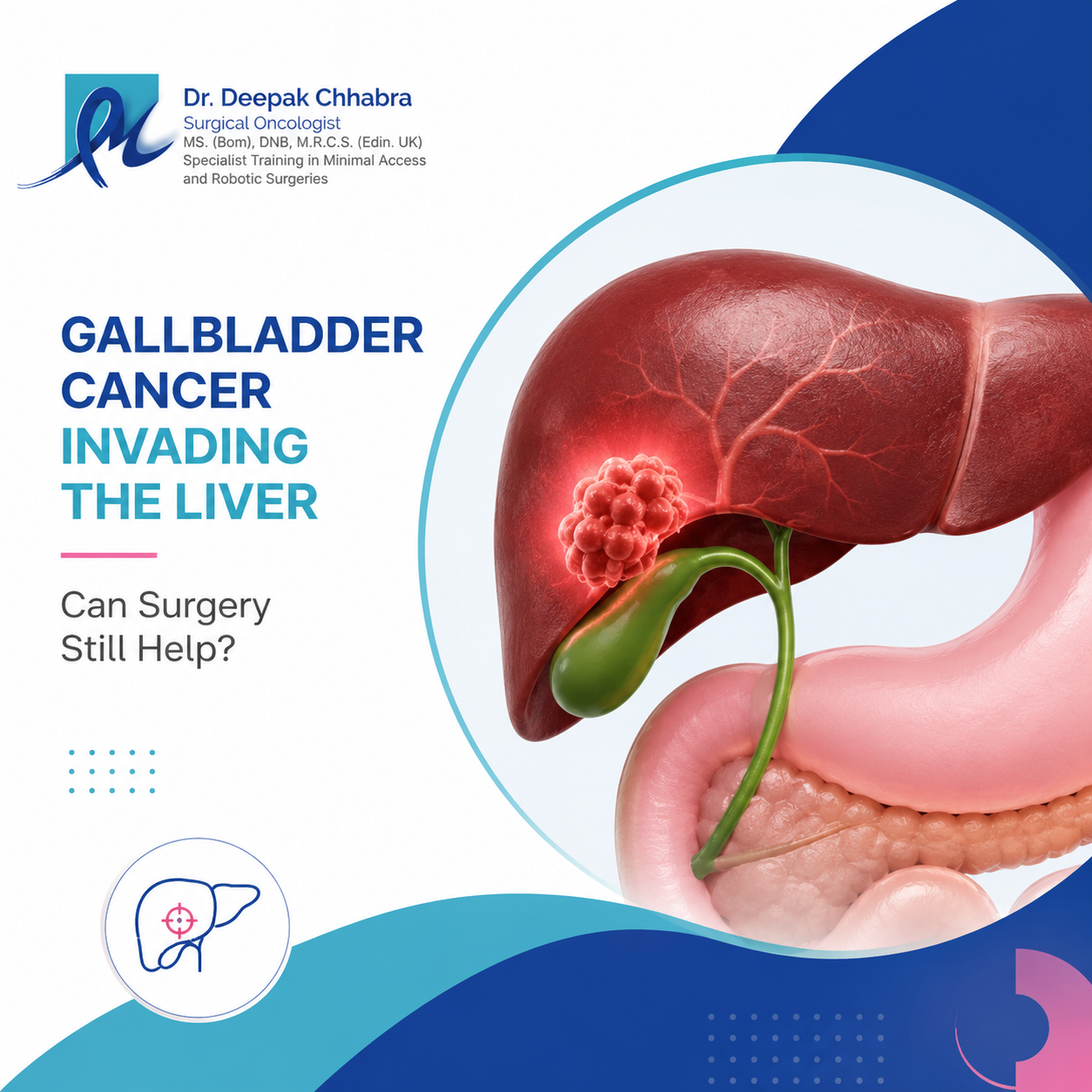
When a scan report says gallbladder cancer is “invading the liver,” families often read that line again and again. The word “liver” feels frightening. Many patients immediately assume that surgery is no longer possible.
That is not always true.
For people exploring gallbladder cancer treatment in Mumbai, the key question is not simply whether the liver is mentioned in the report. The real question is whether the cancer has grown locally into the liver beside the gallbladder, or whether it has spread to distant areas of the liver or elsewhere in the body.
That difference can change the entire treatment plan.
At Mumbai Cancer, patients often come with CT scans, MRI/MRCP reports, PET-CT findings, biopsy records, or pathology reports after gallbladder removal. The family usually wants one clear answer: “Can surgery still help in this situation?” Patients can also read more about the treatment pathway on Mumbai Cancer’s gallbladder cancer information page before planning a consultation.
Gallbladder cancer that has grown into the nearby liver area may still be operable in selected patients. Surgery becomes less likely to help when there are separate liver deposits, peritoneal spread, distant lymph nodes, lung spread, or major blood vessel involvement that cannot be safely removed.
Before deciding, doctors usually review:
| What doctors check | Why it matters |
| Pattern of liver involvement | Local invasion and distant spread are not the same |
| Lymph node status | Helps understand stage and surgical benefit |
| Bile duct involvement | Can change the complexity of surgery |
| Major blood vessels | Vessel involvement may make surgery unsafe or incomplete |
| Patient fitness | Liver function, nutrition, strength, and recovery capacity matter |
The National Cancer Institute describes T3 gallbladder cancer as a disease that may directly invade the liver or one nearby organ, while more advanced vascular or multi-organ involvement can change staging and treatment planning.
For the family, the word “liver” often feels final. For a surgeon, the first task is to understand what kind of liver involvement the report is describing.
The gallbladder sits directly under the liver. Because of this close contact, gallbladder cancer can sometimes grow straight into the liver bed. This is called local invasion. It is serious, but it is not the same as cancer spreading throughout the liver.
A son may ask, “If the liver is involved, is it automatically stage 4?”
A spouse may ask, “Can the part of the liver touching the gallbladder be removed?”
Another family may say, “One doctor said surgery may be possible, but another doctor advised chemotherapy first. How do we decide?”
These questions are not signs of confusion alone. They are exactly the questions that need a careful surgical oncology opinion.
A good consultation should not rush the family into a yes or no answer. It should explain what the scan shows, what is still uncertain, and what additional information is needed before deciding the next step.
This is the most important part of the discussion.
Local liver invasion means the cancer has grown directly from the gallbladder into the nearby liver tissue. In selected patients, doctors may discuss extended surgery, where the gallbladder region, a portion of the adjacent liver, and nearby lymph nodes are removed together.
Distant spread is different. If there are separate tumour deposits in another part of the liver, peritoneum, distant lymph nodes, lungs, or other organs, surgery usually does not remain the first treatment. The plan may shift toward chemotherapy or another systemic approach.
This is why the scan images matter so much.
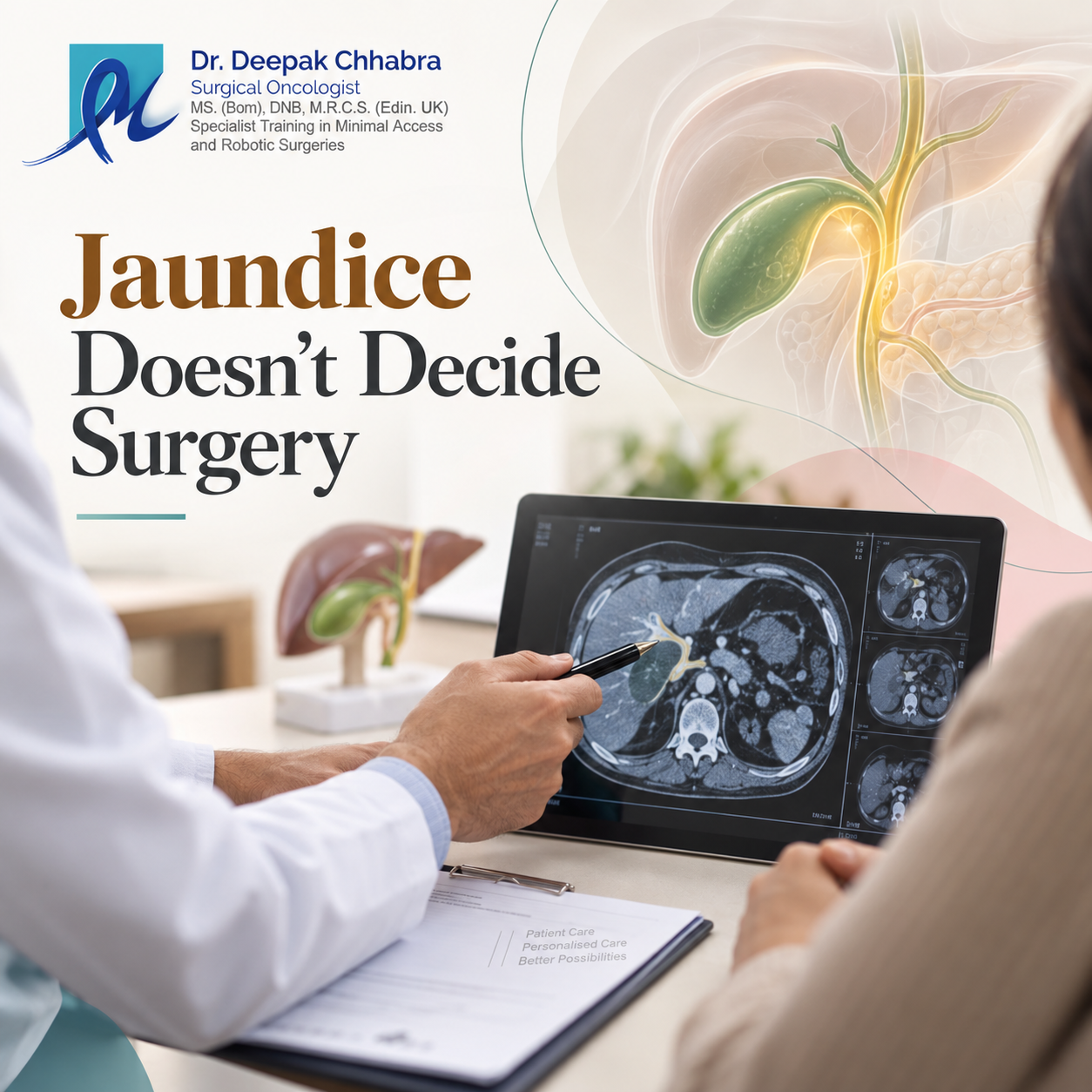
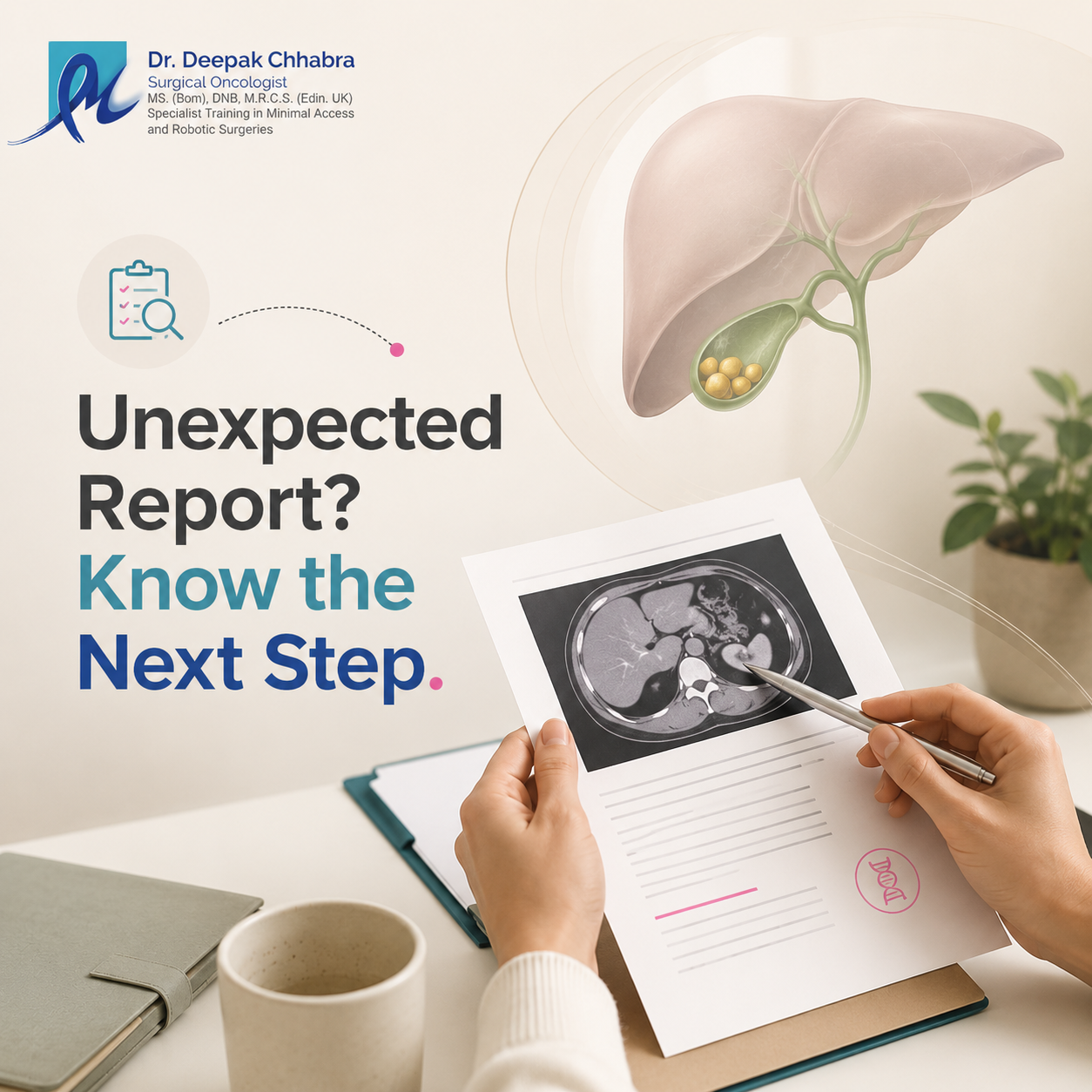
A printed report may say “liver involvement,” but the actual images show whether the involvement is local, multiple, deep, close to vessels, or part of wider spread. A gallbladder cancer specialist in Mumbai may therefore ask to review the CT, MRI/MRCP, or PET-CT images directly instead of relying only on the written summary.
For many families, this is the first moment when they realise that one phrase in a report does not decide everything.
A surgical decision in gallbladder cancer is not made from one scan line. It is made from staging.
Doctors may review contrast-enhanced CT scans, MRI or MRCP for bile duct and liver anatomy, PET-CT in selected cases, liver function tests, tumour markers where relevant, and biopsy or histopathology reports.
If cancer was found after a previous gallbladder removal, the old operative note and pathology report become extremely important. The surgeon needs to know how deep the tumour had entered the gallbladder wall, whether margins were clear, whether the gallbladder was perforated during surgery, and whether lymph nodes were assessed.
The surgical questions are practical:
Can the involved liver area be removed safely?
Is the bile duct involved?
Are major blood vessels free?
Are lymph nodes suspicious?
Is there any sign of spread outside the local region?
Will enough healthy liver remain after surgery?
These questions decide whether surgery is likely to help. A gallbladder cancer doctor in Mumbai should be able to explain them in plain language, especially when the family has received different opinions.
Lymph nodes often create uncertainty in gallbladder cancer.
If nearby regional lymph nodes are involved, surgery may still be discussed in selected cases. If distant lymph nodes are involved, doctors may treat the disease more like systemic spread, and chemotherapy may come first.
Scans can suggest lymph node involvement, but they cannot always confirm microscopic disease. Some nodes look suspicious because of size or shape. Others may look normal but still contain cancer cells. Final confirmation often comes from pathology after surgery.
This is why extended gallbladder cancer surgery may include lymph node clearance. The purpose is not only to remove visible disease. It also helps define the true stage and reduce the chance of leaving known disease behind.
For patients, this can sound technical. But the meaning is simple: lymph nodes help doctors understand whether surgery is likely to give meaningful benefit.
In selected patients, surgery may involve more than removing the gallbladder.
If the disease is local and removable, doctors may discuss removing the gallbladder region, part of the adjacent liver, and regional lymph nodes. In some cases, bile duct resection or reconstruction may also be discussed depending on tumour location.
This is not routine gallbladder surgery. It is a cancer operation.
The surgeon has to judge whether clear margins are possible, whether the remaining liver will be enough, whether there is distant disease, and whether the patient can tolerate a major procedure.
The most honest surgical discussion should answer these questions clearly:
Is surgery being planned with curative intent?
Is chemotherapy needed first?
Is the operation too risky because of vessels, bile duct involvement, distant spread, or poor fitness?
What will recovery involve?
What treatment may be needed after surgery?
Families should not feel uncomfortable asking these questions. They are part of informed decision-making.
Chemotherapy may be advised before surgery when the disease appears borderline, locally advanced, or when doctors want to assess how the cancer behaves before attempting a major operation.
This can be difficult for families to accept. Many people feel that if surgery is possible, it should happen immediately. But with gallbladder cancer, the fastest step is not always the safest or most useful one.
Chemotherapy may also be used after surgery in selected patients or when surgery is not possible because cancer has spread or returned. Cancer Research UK notes that chemotherapy can be used after gallbladder cancer surgery to reduce recurrence risk and may also be used when surgery is not possible or cancer has come back.
In some cases, doctors reassess the disease after chemotherapy using repeat scans and blood tests. If the cancer remains controlled and localized, the surgical question may be reviewed again.
For many families, the hardest part is not understanding the scan report. It is accepting that the safest treatment may not always be the fastest one.
A surgical oncology opinion is useful when gallbladder cancer is confirmed or suspected and there is any question about surgery.
You should seek a focused opinion if the report mentions liver invasion, liver lesions, bile duct involvement, lymph nodes, locally advanced disease, or cancer found after gallbladder removal.
A second opinion is also reasonable before major cancer surgery. It does not mean the earlier advice was wrong. It means the decision is complex enough to review carefully.
Patients should carry CT, MRI/MRCP, PET-CT images, pathology reports, previous gallbladder surgery notes, discharge summaries, liver function tests, tumour marker reports if done, current medicines, and chemotherapy records if treatment has already started.
A useful consultation should answer one central question: is surgery still likely to help, and what must be checked before deciding?
In cases like these, Dr. Deepak Chhabra’s role is not only to discuss whether surgery is possible. It is also to help patients and families understand what the scan is really showing, what details still need review, and whether surgery should happen before or after other treatment.
Dr. Deepak Chhabra is a consultant surgical oncologist with experience in gastrointestinal and hepato-pancreato-biliary cancer surgery. His relevance becomes important when gallbladder cancer involves the liver, bile duct, lymph nodes, or when surgery is being considered after previous gallbladder removal.
At Mumbai Cancer, the focus is on careful staging, direct image review, surgical judgment, and clear counselling. Gallbladder cancer treatment cannot be decided from one phrase in a report. It needs a structured plan that considers the cancer and the patient together.
Gallbladder cancer that has grown into the nearby liver area may still be operable in selected patients. Surgery is more likely when the liver involvement is local, distant spread is absent, major vessels are not unresectable involved, and the patient is fit for major surgery. A surgical oncologist will usually review CT/MRI images, lymph nodes, liver function, and pathology before advising the next step.
Liver involvement does not always mean stage 4 gallbladder cancer. Direct local invasion into the adjacent liver is different from separate liver deposits or widespread disease. Patients should ask whether the scan shows local liver invasion or distant liver metastasis.
Chemotherapy may be given before surgery when the cancer appears borderline, locally advanced, or when doctors want to assess disease control before attempting a major operation. It may also be considered when lymph nodes, bile duct involvement, or scan findings make upfront surgery less clear. Repeat imaging after chemotherapy can help the team decide whether surgery should be reconsidered.
Contrast CT, MRI/MRCP, PET-CT in selected cases, liver function tests, pathology review, and previous surgery notes may be needed before deciding surgery. These tests help doctors assess liver invasion, bile duct involvement, lymph nodes, distant spread, and patient fitness. Patients should carry both reports and scan images because surgical decisions often depend on details seen directly on imaging.
If a report says gallbladder cancer is invading the liver, do not assume the answer is automatically yes or no for surgery.
Ask whether the liver involvement is local or distant. Ask whether lymph nodes, bile duct, vessels, or other organs are involved. Ask whether chemotherapy should come first and what scan findings will decide the next step.
For patients and families dealing with suspected or confirmed gallbladder cancer with liver involvement, a consultation with Dr. Deepak Chhabra at Mumbai Cancer can help turn a frightening scan report into a clearer and more structured surgical plan.
Medical Disclaimer:
This article is for general patient education only and should not be used as a substitute for medical advice, diagnosis, or treatment. Gallbladder cancer treatment decisions depend on individual scan findings, staging, pathology reports, liver function, patient fitness, and specialist evaluation. Please consult a qualified surgical oncologist or oncology team for personalised medical guidance.
Stay up-to-date with the latest developments in cancer research, treatment, and patient stories through our curated collection of cancer blogs and news articles. From breakthrough discoveries to inspiring survivor journeys.
Discover first hand accounts from patients who have experienced compassionate care and expert treatment at our clinic. Read their reviews to get to know their journey.

5 Out of 5 from 92 Reviews




 VIDEO CONSULTATION
 Phone Calls
 Physical visit