
Many people don’t realize they have a neuroendocrine tumor until it reaches an advanced stage. This blog explains why they are diagnosed late and how modern treatment approaches are improving outcomes for patients.
When it comes to cancer, early detection can make a big difference. But in the case of neuroendocrine tumors, many patients are diagnosed late — often after the disease has already progressed.
If you or your family is searching for neuroendocrine tumor treatment in Mumbai, it’s important to understand why this happens and how modern treatment approaches are improving outcomes. Consulting an experienced cancer specialist in Mumbai, such as Dr. Deepak Chhabra, can help in identifying the condition early and planning the right treatment.
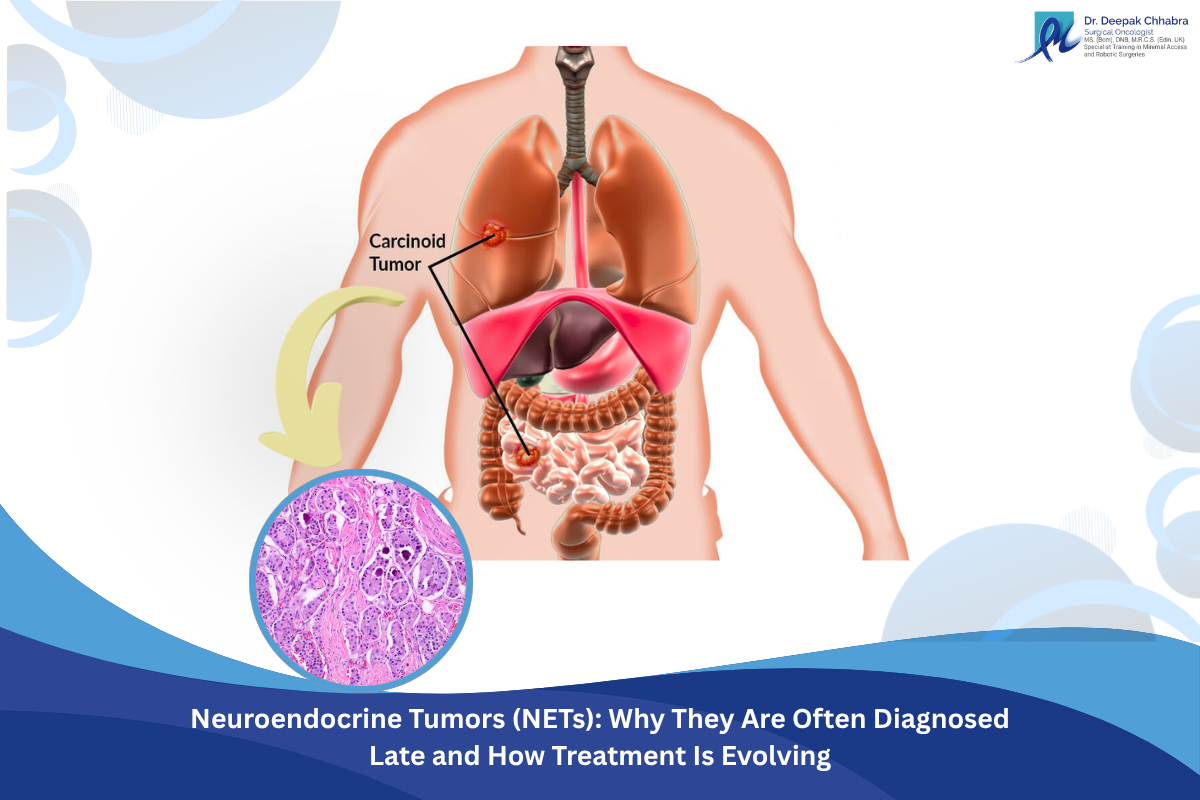
Neuroendocrine tumors (NETs) are a group of cancers that develop from neuroendocrine cells, which are responsible for producing hormones in the body.
These tumors can develop in different organs, including:
Because these tumors can behave differently from other cancers, they are often difficult to identify in the early stages.
Many patients experience symptoms like:
These are easily mistaken for routine health problems, which delays proper diagnosis.
Certain neuroendocrine tumors grow slowly. Patients may not notice significant symptoms for a long time, allowing the disease to progress silently.
Compared to other cancers, awareness about neuroendocrine cancer is still limited, leading to delayed diagnosis.
Diagnosing NETs often requires a combination of:
Without proper evaluation, these tumors can remain undetected.
With advancements in medical technology, detecting neuroendocrine tumors has become more accurate.
Doctors now use:
This helps in planning effective neuroendocrine tumor treatment in Mumbai, especially when diagnosed earlier.
Treatment for neuroendocrine tumors has changed significantly over the years. Today, it is more personalized and depends on the patient’s condition.
Surgery is often recommended when the tumor is localized.
The aim is to:
In cases like an appendix carcinoid tumor, early surgical intervention can be very effective.
Targeted therapy focuses on specific characteristics of cancer cells.
It helps to:
Some neuroendocrine tumors produce excess hormones.
Treatment may include medications that:
Chemotherapy is usually used in:
It helps manage the spread of cancer.
In some patients, neuroendocrine tumors may spread within the abdominal cavity.
In such cases, specialised treatments may be considered, including:
These require careful evaluation by an experienced team.
Every neuroendocrine tumor is different. The same diagnosis can require different treatment approaches for different patients.
An experienced cancer surgeon in Mumbai, such as Dr. Deepak Chhabra, focuses on a comprehensive and multidisciplinary approach to evaluate each case. This helps in selecting the most appropriate treatment based on the tumor type, stage, and patient condition.
Patients looking for neuroendocrine tumor treatment in Mumbai should consider consulting a specialist who can guide them through all available options.
You should seek medical advice if you notice:
Early consultation with a cancer specialist in Mumbai can help in accurate diagnosis and timely treatment.
Many neuroendocrine tumors can be managed effectively, especially when detected early.
With modern treatment:
The most common neuroendocrine tumor is usually found in the gastrointestinal tract, especially in the small intestine, rectum, or appendix.
For example, appendix carcinoid tumors are often detected incidentally during surgeries like appendectomy.
These tumors are usually slow-growing, but they still require proper evaluation and follow-up.
The growth rate of neuroendocrine tumors can vary:
The growth depends on the type, grade, and location of the tumor. Doctors usually determine this through biopsy and imaging tests.
Survival rates vary depending on:
Many neuroendocrine tumors have a better prognosis compared to other cancers, especially when detected early.
Even in advanced cases, patients can often live for many years with proper treatment and monitoring.
You should consult a cancer specialist in Mumbai who has experience in treating gastrointestinal and neuroendocrine cancers.
A multidisciplinary team approach, including a cancer surgeon in Mumbai, a medical oncologist, and a radiologist, helps in planning the most effective treatment.
Yes, there is a possibility of recurrence.
That’s why regular follow-up is very important after treatment.
Doctors may recommend:
Early detection of recurrence helps in better management.
Stay up-to-date with the latest developments in cancer research, treatment, and patient stories through our curated collection of cancer blogs and news articles. From breakthrough discoveries to inspiring survivor journeys.
Discover first hand accounts from patients who have experienced compassionate care and expert treatment at our clinic. Read their reviews to get to know their journey.

5 Out of 5 from 92 Reviews






 VIDEO CONSULTATION
 Phone Calls
 Physical visit